
Destination Name: Faroe Islands
Region: North Atlantic Ocean, between Iceland, Norway, and Scotland
Status: Self-governing territory within the Kingdom of Denmark
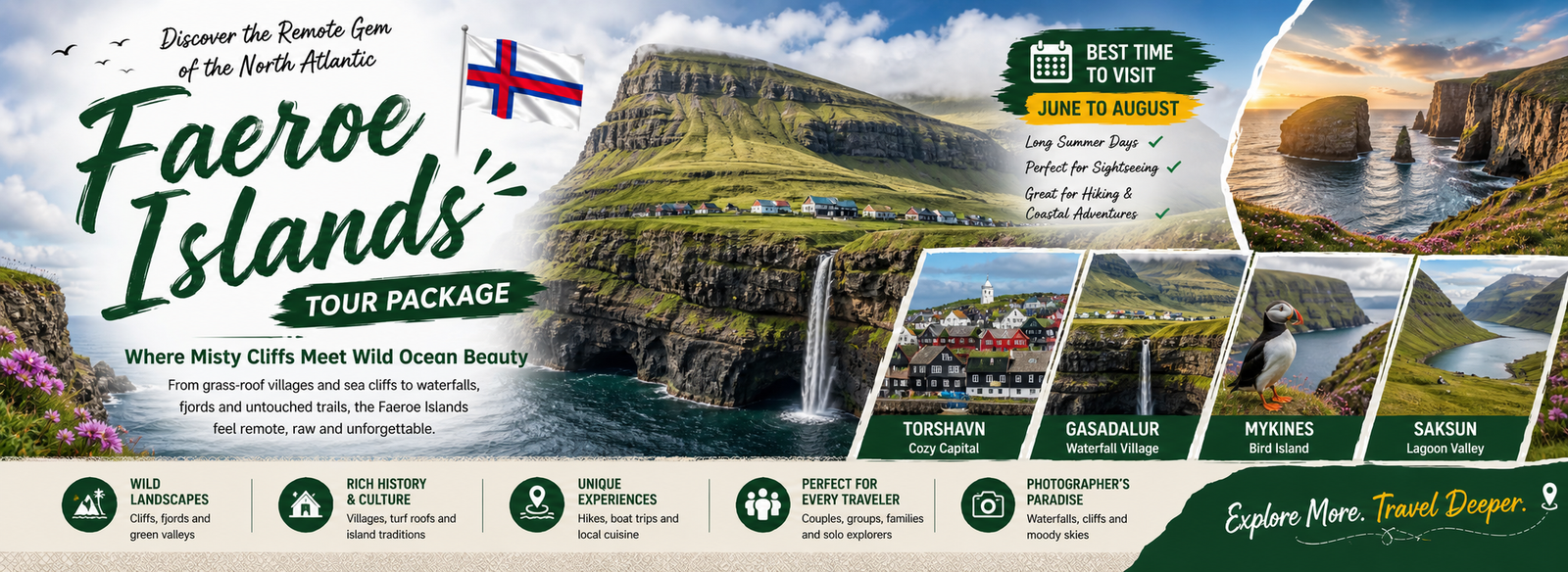
Famous For: Dramatic sea cliffs, green mountains, waterfalls, puffins, remote villages, turf-roofed houses, hiking trails, sheep, fjords, birdwatching, photography, and untouched Nordic landscapes.
The Faroe Islands are one of Europe’s most dramatic and peaceful island destinations. The destination is made up of 18 rugged islands surrounded by the North Atlantic Ocean. It is perfect for travellers who love raw nature, quiet villages, hiking, photography, road trips, birdlife, waterfalls, coastal cliffs, and offbeat Nordic travel. The Faroe Islands are not a typical beach destination; they are best for slow travel, scenic drives, nature experiences, and peaceful exploration.
Best Months: May to August
Good Months: April, September, and October
Rainier / Windier Periods: November to March can be colder, wetter, darker, and more unpredictable.
Best for sightseeing: May–September
Best for hiking: June–September
Best for puffins and birdwatching: May–August
Best for photography: May–October
Best for budget travellers: March–April and October–November
Solo Travelers: ⭐⭐⭐⭐
Couples: ⭐⭐⭐⭐
Families: ⭐⭐⭐
Friends / Groups: ⭐⭐⭐⭐
Honeymoon: ⭐⭐⭐⭐
Senior Citizens: ⭐⭐⭐
Adventure Seekers: ⭐⭐⭐⭐⭐
Luxury Travelers: ⭐⭐⭐
Budget Travelers: ⭐⭐
Recommended Stay: 5 to 7 days
Weekend Trip Possible? Not ideal. A weekend trip is possible only if flights match perfectly, but the Faroe Islands deserve more time because weather changes quickly and many attractions need driving, ferry planning, and flexible scheduling.
Best Plan: 6 to 7 days for Tórshavn, Vágar, Mykines, Saksun, Tjørnuvík, Gjógv, Klaksvík, Kalsoy, waterfalls, hiking trails, villages, photography points, and relaxed scenic drives.
The main way to reach the Faroe Islands is by air through Vágar Airport. Flights commonly connect through Denmark, Iceland, Norway, and other selected European routes depending on the season.
Nearest Airport: Vágar Airport
Main Airline: Atlantic Airways
Railway: Not available
Road Connectivity: Good road network between many islands through bridges, tunnels, and undersea tunnels
Ferry: Ferries connect selected islands and remote villages
Self-drive: Highly recommended for flexibility, but roads can be narrow, winding, foggy, and exposed to strong winds.
Travellers can also reach the Faroe Islands by sea on selected ferry routes, but flying is the most convenient option for most visitors.
Visa requirements depend on nationality and travel route. The Faroe Islands are not part of the Schengen Area, so a Schengen visa alone may not be enough for travellers who need a visa for the Faroe Islands.
Indian passport holders should check the latest Faroe Islands visa rules before booking. Travellers may need a specific visa valid for the Faroe Islands, and if travelling through Denmark, Iceland, or another Schengen country, Schengen transit or entry requirements may also apply.
General documents usually required include:
• Valid passport
• Faroe Islands visa or valid entry permission if required
• Schengen visa or transit permission if travelling through a Schengen country
• Return or onward flight ticket
• Accommodation proof
• Travel insurance
• Sufficient funds
• Complete travel itinerary
Budget Traveler: ₹12,000–₹18,000 per day
Mid-Range Traveler: ₹20,000–₹35,000 per day
Luxury Traveler: ₹40,000+ per day
The Faroe Islands are generally an expensive destination because accommodation, food, tours, car rentals, ferries, tunnels, and remote logistics can cost more than many mainstream European destinations. Budget travellers can reduce costs by travelling in shoulder season, booking early, choosing guesthouses or apartments, cooking some meals, sharing a rental car, and focusing on free scenic viewpoints and hikes.
The Faroe Islands have cool, windy, wet, and highly changeable weather. Sunshine, rain, fog, and strong wind can happen on the same day. Summers are mild and best for hiking and sightseeing, while winters are darker and more challenging for outdoor travel.
Packing: Waterproof jacket, windproof jacket, warm layers, thermal innerwear, hiking shoes, rain pants, gloves, woollen cap, quick-dry clothes, camera protection, power bank, offline maps, reusable water bottle, and extra socks.
• Múlafossur Waterfall
• Sørvágsvatn / Leitisvatn Lake
• Trælanípa viewpoint
• Mykines Island
• Saksun Village
• Tjørnuvík Village
• Gjógv Village
• Kallur Lighthouse, Kalsoy
• Tórshavn Old Town / Tinganes
• Kirkjubøur historic village
• Vestmanna Sea Cliffs
• Drangarnir Sea Stacks
• Risin og Kellingin sea stacks
• Fossa Waterfall
• Klaksvík
• Nólsoy Island
• Viðareiði Village
• Slættaratindur, the highest mountain in the Faroe Islands
• Hike to Trælanípa viewpoint
• See Múlafossur Waterfall in Gásadalur
• Visit Mykines for puffins in season
• Explore Tórshavn and Tinganes
• Take a boat trip to Vestmanna Sea Cliffs
• Visit Saksun and Tjørnuvík villages
• Photograph Gjógv’s natural harbour
• Drive through scenic tunnels and mountain roads
• Visit Kallur Lighthouse on Kalsoy
• Enjoy local Faroese food experiences
• Explore turf-roofed villages
• Go birdwatching
• Visit remote islands by ferry
• Try kayaking or sea tours if weather allows
• Experience peaceful Nordic village life
Faroese cuisine is shaped by the sea, sheep farming, Nordic traditions, and remote island life. The food culture includes seafood, lamb, fish, fermented dishes, soups, potatoes, rhubarb desserts, and modern Nordic dining.
Must-try foods include:
• Faroese lamb
• Fresh salmon
• Cod and haddock dishes
• Fish soup
• Seafood platters
• Ræst kjøt, traditional fermented lamb
• Skerpikjøt, wind-dried mutton
• Rhubarb desserts
• Faroese pancakes
• Nordic-style bakery items
• Local craft drinks and coffee
Vegetarian options are available in Tórshavn and larger towns, but choices may be limited in remote areas.
The Faroe Islands offer hotels, guesthouses, B&Bs, apartments, farm stays, cottages, hostels, and boutique stays. Accommodation is limited compared with major tourist destinations, so early booking is very important, especially from May to September.
Best stay areas:
Tórshavn, Vágar, Klaksvík, Gjógv, Eysturoy, Streymoy, and selected village guesthouses.
Best for first-time visitors: Tórshavn
Best for road trips: Vágar or Tórshavn
Best for photography: Vágar, Eysturoy, Kalsoy, and Gjógv
Best for families: Tórshavn or serviced apartments
Best for peaceful stays: Village guesthouses and countryside cottages
A rental car is the easiest and most flexible way to explore the Faroe Islands. Many islands are connected by roads, bridges, tunnels, and undersea tunnels. Public buses and ferries are available but schedules can be limited, especially in remote areas and outside peak season.
Best ways to get around:
• Rental car
• Public buses
• Ferries
• Helicopter services for selected islands
• Guided tours
• Taxis in main towns
Drivers should be careful on narrow roads, one-lane tunnels, mountain routes, foggy conditions, sheep crossings, and strong winds. Some undersea tunnels and routes may have tolls.
Overall Safety: Very good
Solo Female Safety: Generally very good, with normal precautions advised
Common Issues: Sudden weather changes, fog, strong wind, slippery trails, steep cliffs, remote hiking routes, limited public transport, sheep on roads, expensive services, and ferry delays
Emergency Planning: Carry travel insurance, check weather before hiking, inform someone about hiking plans, avoid cliff edges, download offline maps, and follow local trail rules.
The Faroe Islands are safe in terms of crime, but nature can be risky if travellers underestimate the weather, hiking routes, cliffs, wind, and fog.
Internet connectivity is generally good in towns, hotels, cafés, and many populated areas. Remote valleys, hiking routes, and outer islands may have weaker coverage.
Travel Tips:
• Download offline maps
• Keep important bookings saved offline
• Check roaming charges before travel
• Use local SIM or eSIM if available
• Carry a power bank during long drives and hikes
• Do not rely only on mobile signal during remote hikes
The Faroe Islands are known for wool products, knitwear, handmade crafts, local design, souvenirs, books, postcards, photography prints, Nordic home décor, and local food products.
Best things to buy:
• Faroese wool sweaters
• Knitwear and scarves
• Handmade crafts
• Local art
• Postcards
• Books about Faroese culture
• Photography prints
• Nordic design items
• Local food products
• Small sheep-themed souvenirs
Best shopping areas: Tórshavn, local craft shops, museum shops, village stores, and design boutiques.
Best photo spots:
• Múlafossur Waterfall
• Trælanípa viewpoint
• Sørvágsvatn / Leitisvatn Lake
• Saksun Village
• Tjørnuvík Village
• Gjógv Village
• Kallur Lighthouse
• Mykines Island
• Vestmanna Sea Cliffs
• Fossa Waterfall
• Drangarnir Sea Stacks
• Risin og Kellingin
• Tinganes, Tórshavn
• Kirkjubøur
• Viðareiði
Drone use should be checked locally before flying. Some areas may have restrictions because of villages, birds, private land, weather, and aviation safety.
The Faroe Islands can be good for families who enjoy nature, peaceful road trips, easy walks, wildlife, villages, and scenic views. However, it may not be ideal for families looking for theme parks, shopping malls, warm beaches, or fast entertainment.
Families with children should choose easy viewpoints, short hikes, boat trips in calm weather, Tórshavn-based stays, and guided tours. Parents should be careful near cliffs, waterfalls, strong winds, slippery trails, and sheep roads.
Accessibility can be challenging because of steep roads, remote villages, steps, uneven paths, hiking trails, ferries, and rugged landscapes. Tórshavn and some hotels are easier for senior travellers, but many natural attractions require walking or hiking.
Senior citizens and travellers with mobility issues should choose central accommodation, use guided tours, avoid difficult hikes, check ferry access in advance, and plan flexible sightseeing according to weather.
Respect private land, follow marked trails, do not disturb sheep or birds, avoid cliff edges, reduce plastic waste, support local businesses, use local guides where required, follow village rules, and pay hiking or land access fees where applicable.
The Faroe Islands are fragile and remote, so responsible travel is very important. Visitors should travel slowly, avoid damaging grass paths, respect local homes, and avoid crowding small villages.
Pros: Stunning landscapes, peaceful villages, excellent photography, safe environment, unique Nordic culture, dramatic cliffs, waterfalls, puffins, scenic road trips, and offbeat travel appeal.
Cons: Expensive destination, unpredictable weather, limited public transport, limited accommodation, some paid hikes, strong winds, ferry disruptions, remote locations, and not ideal for nightlife or warm beach holidays.
Currency: All budget planning shown in Indian Rupees
Language: Faroese and Danish; English is widely understood in tourism areas
Time Zone: GMT during standard time, GMT+1 during daylight saving time
Country Code: +298
Power Plug: Type C, E, F, and K may be found; travellers should carry a universal adapter
Capital / Main Town: Tórshavn
Airport: Vágar Airport
Best Known For: Cliffs, waterfalls, puffins, sheep, hiking, and remote Nordic scenery
Travel Style: Nature, photography, hiking, road trip, slow travel, and offbeat exploration
Day 1: Arrive at Vágar Airport, visit Múlafossur Waterfall, explore Gásadalur, and stay near Vágar or Tórshavn.
Day 2: Hike to Trælanípa viewpoint, see Sørvágsvatn / Leitisvatn Lake, visit Bøur village, and enjoy sunset photography.
Day 3: Explore Tórshavn, Tinganes, local cafés, harbour area, museums, and nearby Kirkjubøur historic village.
Day 4: Visit Saksun, Tjørnuvík, Fossa Waterfall, and Risin og Kellingin viewpoint.
Day 5: Explore Eysturoy, Gjógv village, scenic mountain roads, and local viewpoints.
Day 6: Visit Klaksvík and take the trip to Kalsoy for Kallur Lighthouse if weather and ferry schedules allow.
Day 7: Take a boat trip to Vestmanna Sea Cliffs or visit Mykines in puffin season, then return for shopping, local food, and departure preparation.
Book accommodation and car rental early, especially for summer travel. Keep your itinerary flexible because weather can change quickly. Carry waterproof and windproof clothing even in summer. Check ferry schedules in advance. Drive slowly on narrow roads and watch for sheep. Do not feed or disturb wildlife. Save offline maps before remote trips. Carry snacks and water during long drives. Always check hiking conditions before starting a trail.
Overall Rating: 9/10
Best For: Nature lovers, hikers, photographers, birdwatchers, road trip travellers, couples, offbeat explorers, and slow travel lovers.
Who Should Skip: Party travellers, luxury-only travellers, very low-budget travellers, beach holiday seekers, and tourists who dislike cold, windy, rainy, or unpredictable weather.
Worth Visiting? Yes, the Faroe Islands are absolutely worth visiting for travellers who love dramatic nature, remote villages, scenic drives, waterfalls, cliffs, hiking, and peaceful Nordic landscapes.
📍 Location: North Atlantic Ocean, between Iceland, Norway, and Scotland
🌤️ Best Time: May to August
🗓️ Ideal Duration: 5–7 days
💰 Budget Range: ₹12,000–₹40,000+ per day
🎯 Best For: Nature, hiking, photography, puffins, road trips, and remote travel
✈️ Nearest Airport: Vágar Airport
🍽️ Must-Try Food: Faroese lamb, salmon, fish soup, seafood, and rhubarb desserts
📸 Best Photo Spot: Múlafossur Waterfall, Trælanípa, Saksun, Gjógv, and Kallur Lighthouse
⭐ Overall Rating: 9/10
💡 Why Visit? The Faroe Islands offer some of Europe’s most dramatic untouched landscapes, peaceful villages, waterfalls, cliffs, puffins, and unforgettable road-trip views.


Login to continue your travel journey with us