Destination Name: Switzerland
Region: Central Europe
Status: Sovereign country
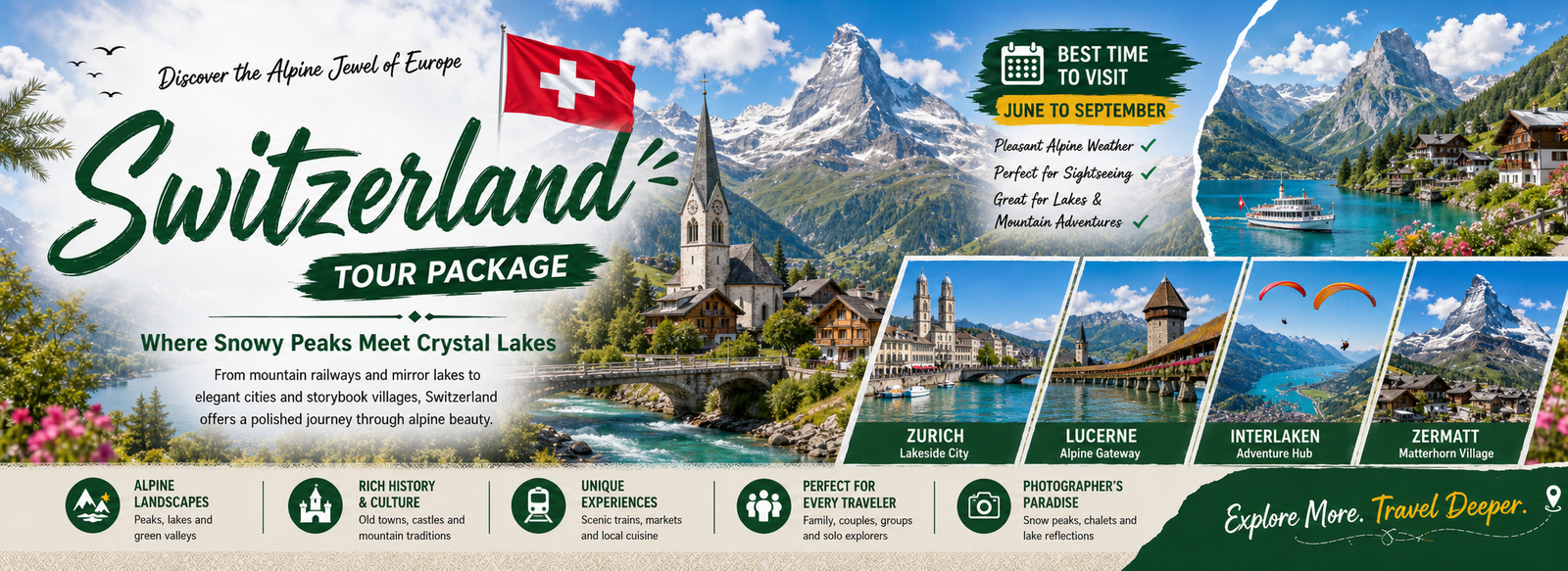
Famous For: Swiss Alps, Matterhorn, Jungfrau, Interlaken, Zurich, Lucerne, Geneva, Zermatt, scenic train journeys, chocolate, cheese, watches, lakes, mountain villages, skiing, hiking, luxury travel, and breathtaking landscapes.
Switzerland is one of the most beautiful and premium travel destinations in the world. It is famous for snow-covered mountains, clean lakes, scenic villages, luxury resorts, efficient public transport, beautiful cities, romantic landscapes, and world-class mountain experiences. Switzerland is ideal for honeymoon couples, families, nature lovers, photographers, luxury travellers, adventure seekers, and first-time Europe travellers.
Best Months: May to September
Good Months: April, October, and December
Winter Season: December to February is best for snow, skiing, Christmas markets, and winter scenery.
Best for sightseeing: May–September
Best for hiking: June–September
Best for snow and skiing: December–March
Best for honeymoon: April–June and September–December
Best for budget travellers: March–April and October–November
Solo Travelers: ⭐⭐⭐⭐
Couples: ⭐⭐⭐⭐⭐
Families: ⭐⭐⭐⭐⭐
Friends / Groups: ⭐⭐⭐⭐
Honeymoon: ⭐⭐⭐⭐⭐
Senior Citizens: ⭐⭐⭐⭐
Adventure Seekers: ⭐⭐⭐⭐⭐
Luxury Travelers: ⭐⭐⭐⭐⭐
Budget Travelers: ⭐⭐
Recommended Stay: 7 to 10 days
Weekend Trip Possible? Yes, but only for one city or one region such as Zurich, Lucerne, Geneva, or Interlaken. A proper Switzerland trip needs at least 7 days.
Best Plan: 8 to 10 days for Zurich, Lucerne, Interlaken, Jungfraujoch, Lauterbrunnen, Grindelwald, Zermatt, Matterhorn, Geneva, Montreux, and scenic train experiences.
Switzerland is very well connected by international flights, trains, buses, and road routes from nearby European countries. Most international travellers arrive by air through Zurich, Geneva, or Basel.
Main Airports: Zurich Airport, Geneva Airport, Basel Airport, and Bern Airport
Railway: Excellent international and domestic railway connectivity
Road Connectivity: Well connected with France, Germany, Italy, Austria, and Liechtenstein
Self-drive: Possible and scenic, but public transport is usually easier for first-time visitors.
Best Internal Travel Option: Train, bus, boat, cable car, and mountain railway network
Visa requirements depend on nationality, passport type, and travel purpose. Indian passport holders generally need a Schengen tourist visa to visit Switzerland for short-term tourism.
General documents usually required include:
• Valid passport
• Schengen tourist visa
• Completed visa application form
• Recent photograph
• Travel insurance
• Return or onward flight reservation
• Accommodation proof
• Complete travel itinerary
• Sufficient funds
• Employment, business, or financial documents if required
Travellers should apply early and follow the official checklist carefully because incomplete documentation can delay or affect the visa process.
Budget Traveler: ₹12,000–₹20,000 per day
Mid-Range Traveler: ₹22,000–₹45,000 per day
Luxury Traveler: ₹60,000+ per day
Switzerland is one of Europe’s most expensive travel destinations. Budget travellers can reduce costs by using public transport passes, staying in hostels or apartments, eating from supermarkets or casual cafés, booking early, travelling in shoulder season, and choosing free viewpoints, lakeside walks, old towns, and hiking routes.
Switzerland has different weather depending on altitude and region. Cities like Zurich, Geneva, Basel, and Lucerne are milder, while mountain areas like Zermatt, Jungfrau, Davos, and St. Moritz are colder. Summers are pleasant for sightseeing, lakes, hiking, and mountain excursions. Winters are cold and ideal for snow, skiing, Christmas markets, and alpine scenery.
Packing: Layered clothes, waterproof jacket, warm jacket in winter, comfortable walking shoes, sunglasses, sunscreen, gloves, woollen cap, scarf, power adapter, reusable water bottle, camera, power bank, and offline maps.
• Matterhorn
• Zermatt
• Jungfraujoch
• Interlaken
• Lauterbrunnen Valley
• Grindelwald
• Lucerne
• Chapel Bridge
• Lake Lucerne
• Zurich Old Town
• Lake Zurich
• Geneva
• Lake Geneva
• Montreux
• Chillon Castle
• Bern Old Town
• Rhine Falls
• Mount Titlis
• Mount Pilatus
• Gornergrat Railway
• Glacier Express
• Bernina Express
• St. Moritz
• Swiss National Park
• Visit Jungfraujoch
• See the Matterhorn in Zermatt
• Explore Lauterbrunnen Valley
• Ride the Glacier Express
• Take the Bernina Express scenic train
• Walk around Lucerne and Chapel Bridge
• Enjoy Lake Geneva and Montreux
• Visit Chillon Castle
• Explore Zurich Old Town
• Visit Rhine Falls
• Take a boat ride on Swiss lakes
• Go skiing in winter
• Try paragliding in Interlaken
• Hike in the Swiss Alps
• Visit Mount Titlis or Mount Pilatus
• Enjoy Swiss chocolate and cheese experiences
• Explore Bern Old Town
• Take mountain cable cars and funiculars
• Photograph alpine villages
• Experience Christmas markets in winter
Swiss cuisine is famous for cheese, chocolate, bakery items, mountain food, and regional dishes influenced by German, French, and Italian food cultures.
Must-try foods include:
• Cheese fondue
• Raclette
• Rösti
• Swiss chocolate
• Zürcher-style creamy mushroom dish
• Älplermagronen
• Swiss pastries
• Birchermüesli
• Cheese tarts
• Fresh mountain dairy products
• Swiss bread
• Lake fish dishes
• Hot chocolate
• Local bakery items
Vegetarian food is available in major cities and tourist towns, but mountain villages may have fewer options.
Switzerland offers luxury hotels, mountain resorts, boutique hotels, hostels, apartments, chalets, family hotels, wellness resorts, ski lodges, lakeside hotels, and countryside stays. Accommodation is usually expensive, so early booking is important.
Best stay areas:
Zurich, Lucerne, Interlaken, Grindelwald, Lauterbrunnen, Zermatt, Geneva, Montreux, Bern, St. Moritz, and Lugano.
Best for first-time visitors: Lucerne, Interlaken, and Zurich
Best for couples: Zermatt, Lucerne, Montreux, and Grindelwald
Best for honeymoon: Zermatt, Interlaken, Lucerne, and St. Moritz
Best for families: Lucerne, Interlaken, Zurich, and Grindelwald
Best for adventure: Interlaken, Grindelwald, Zermatt, and Davos
Best for luxury travellers: Zermatt, St. Moritz, Geneva, Zurich, and Montreux
Best for budget travellers: Hostels, apartments, and stays outside main tourist centres
Switzerland has one of the best public transport systems in the world. Trains, buses, boats, cable cars, mountain railways, and city transport are well connected and reliable.
Best ways to get around:
• Trains
• Buses
• Boats
• Trams
• Cable cars
• Mountain railways
• Scenic train routes
• Walking in old towns
• Rental car for countryside flexibility
The Swiss Travel Pass is useful for many international visitors because it allows convenient travel across trains, buses, boats, city transport, and selected scenic routes. Mountain excursions may still require additional payment or discounted tickets.
Overall Safety: Excellent
Solo Female Safety: Very good, with normal precautions advised
Common Issues: High travel costs, mountain weather changes, slippery snow or ice, altitude sickness, expensive taxis, crowded attractions in peak season, and strict local rules
Emergency Planning: Carry travel insurance, check weather before mountain trips, wear proper shoes, keep documents safe, and follow mountain safety instructions.
Switzerland is generally one of the safest destinations for tourists, but travellers should be careful in crowded train stations, tourist areas, and mountain regions.
Internet and mobile connectivity are excellent in cities, hotels, train stations, cafés, airports, and most tourist areas. Mountain regions may have weaker signal in remote valleys or high-altitude routes.
Travel Tips:
• Use hotel and café Wi-Fi where available
• Buy local SIM or eSIM if needed
• Download offline maps
• Save train tickets and hotel bookings offline
• Carry a power bank during mountain excursions
• Check roaming charges before travel
Switzerland is famous for premium shopping, luxury watches, chocolates, knives, souvenirs, skincare, fashion, local crafts, and mountain products.
Best things to buy:
• Swiss chocolates
• Swiss watches
• Swiss army knives
• Cowbells
• Cheese products
• Handmade souvenirs
• Music boxes
• Local crafts
• Snow globes
• Luxury fashion
• Skincare products
• Postcards and magnets
• Wooden toys
• Mountain-themed gifts
Best shopping areas: Zurich Bahnhofstrasse, Lucerne Old Town, Geneva, Interlaken, Zermatt, Bern Old Town, Montreux, and airport shops.
Best photo spots:
• Matterhorn, Zermatt
• Gornergrat viewpoint
• Jungfraujoch
• Lauterbrunnen Valley
• Staubbach Falls
• Grindelwald First
• Lake Brienz
• Lake Lucerne
• Chapel Bridge, Lucerne
• Mount Titlis
• Mount Pilatus
• Rhine Falls
• Chillon Castle
• Montreux lakeside
• Bern Old Town
• Zurich Old Town
• Glacier Express route
• Bernina Express route
• St. Moritz
• Swiss alpine villages
Drone use should be checked locally before flying. Some areas may have restrictions due to airports, villages, protected landscapes, wildlife zones, and mountain safety rules.
Switzerland is excellent for families because it offers clean cities, safe public transport, mountain excursions, lakes, boat rides, museums, scenic train journeys, parks, chocolate experiences, snow activities, and family-friendly hotels.
Families should plan shorter travel days, book mountain tickets early, carry warm clothes for children, check weather before high-altitude trips, and choose central accommodation near train stations.
Switzerland is generally good for senior citizens and travellers with mobility needs, especially in cities, airports, trains, museums, and major tourist areas. However, mountain villages, snow routes, cable cars, old streets, and hiking trails may be challenging.
Senior travellers should choose central hotels, avoid too many hotel changes, use trains instead of long road drives, check accessibility for mountain excursions, and avoid rushed itineraries.
Use public transport, respect local quiet hours, avoid littering, carry reusable bottles, stay on marked hiking trails, avoid disturbing wildlife, support local businesses, reduce plastic use, and follow mountain safety and environmental rules.
Switzerland is known for clean landscapes and responsible tourism, so travellers should protect lakes, villages, mountains, and natural areas.
Pros: Breathtaking landscapes, excellent public transport, safe destination, beautiful cities, clean environment, luxury experiences, scenic trains, romantic mountain villages, family-friendly travel, and year-round tourism.
Cons: Very expensive, attractions and mountain excursions can be costly, peak-season crowds, weather changes quickly in mountains, food costs are high, and strict planning is needed for budget travellers.
Currency: All budget planning shown in Indian Rupees only
Language: German, French, Italian, and Romansh
Time Zone: GMT+1 during standard time, GMT+2 during daylight saving time
Country Code: +41
Power Plug: Type J
Capital / Main Town: Bern
Main Airports: Zurich Airport, Geneva Airport, Basel Airport, and Bern Airport
Best Known For: Swiss Alps, Matterhorn, Jungfrau, chocolate, cheese, watches, lakes, and scenic trains
Travel Style: Honeymoon, luxury travel, family travel, nature, adventure, photography, skiing, and scenic train journeys
Day 1: Arrive in Zurich, explore Zurich Old Town, Lake Zurich, Bahnhofstrasse, and local cafés.
Day 2: Travel to Lucerne, visit Chapel Bridge, Lake Lucerne, Lion Monument, and enjoy a relaxed lakeside walk.
Day 3: Take a mountain excursion to Mount Titlis or Mount Pilatus and return to Lucerne.
Day 4: Travel to Interlaken, explore Lake Brienz, Lake Thun, and the town centre.
Day 5: Visit Jungfraujoch, Grindelwald, and Lauterbrunnen Valley.
Day 6: Travel to Zermatt and enjoy Matterhorn views, village walks, and local food.
Day 7: Take the Gornergrat Railway or explore nearby viewpoints around Zermatt.
Day 8: Travel to Montreux, visit Chillon Castle, Lake Geneva, and the lakeside promenade.
Day 9: Visit Geneva or Bern depending on your route and interest.
Day 10: Shopping, chocolate tasting, final sightseeing, and departure preparation.
Book hotels and scenic trains early, especially in summer and winter peak season. Choose accommodation near train stations to save time and energy. Use public transport instead of taxis wherever possible. Carry warm clothes even in summer if visiting mountains. Check weather before mountain excursions. Keep some flexibility because fog or rain can affect views. Avoid overpacking because train travel involves walking between platforms. Carry snacks and water during long sightseeing days. Plan budgets carefully because Switzerland is expensive.
Overall Rating: 9.5/10
Best For: Honeymoon couples, families, luxury travellers, nature lovers, photographers, adventure seekers, train lovers, senior travellers, and first-time Europe travellers.
Who Should Skip: Very low-budget travellers, party-focused travellers, tourists who dislike cold weather, and travellers who do not enjoy nature or scenic travel.
Worth Visiting? Yes, Switzerland is absolutely worth visiting because it offers some of the world’s most beautiful mountains, lakes, villages, train journeys, luxury experiences, and peaceful landscapes.
📍 Location: Central Europe
🌤️ Best Time: May to September
🗓️ Ideal Duration: 7–10 days
💰 Budget Range: ₹12,000–₹60,000+ per day
🎯 Best For: Honeymoon, family travel, luxury travel, nature, mountains, scenic trains, skiing, and photography
✈️ Nearest / Main Airport: Zurich Airport
🍽️ Must-Try Food: Cheese fondue, raclette, rösti, Swiss chocolate, pastries, and hot chocolate
📸 Best Photo Spot: Matterhorn, Lauterbrunnen Valley, Jungfraujoch, Lake Lucerne, Grindelwald, and Chillon Castle
⭐ Overall Rating: 9.5/10
💡 Why Visit? Switzerland is one of the world’s most beautiful travel destinations, offering snow-covered mountains, clean lakes, scenic train rides, luxury stays, romantic villages, and unforgettable alpine views.


Login to continue your travel journey with us