
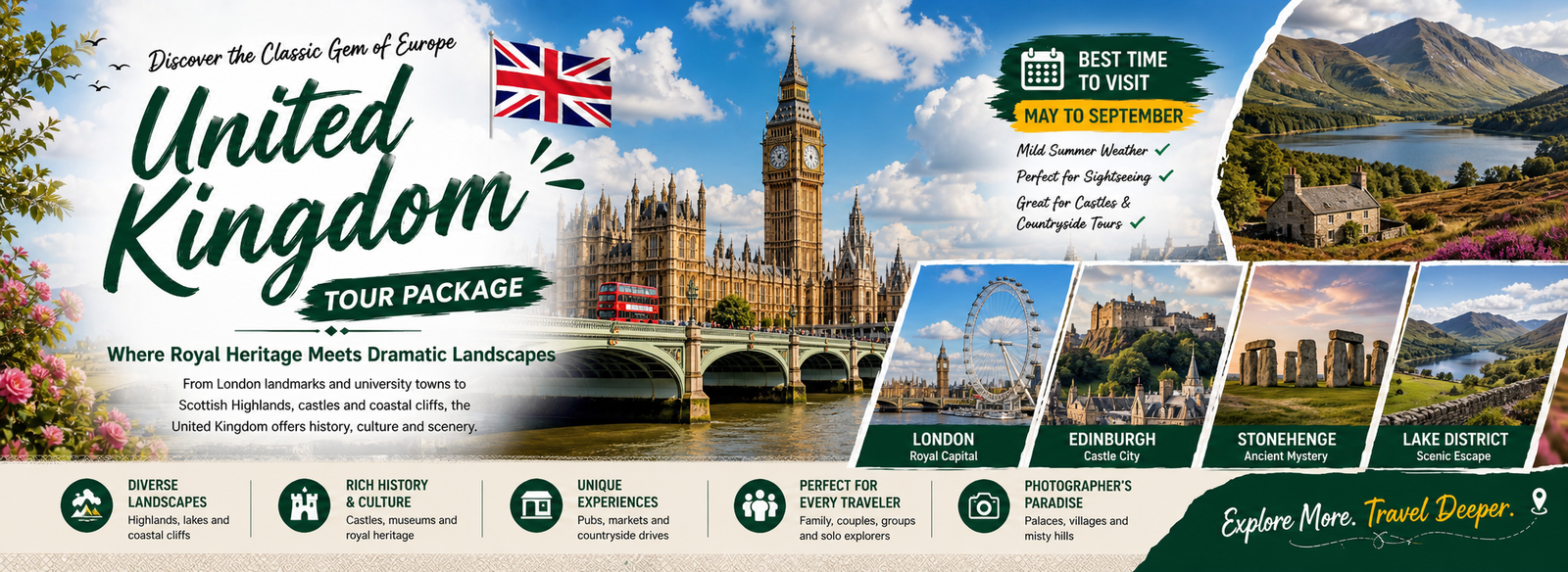
Destination Name: United Kingdom
Region: Northwestern Europe
Status: Sovereign country made up of England, Scotland, Wales, and Northern Ireland
Famous For: London, royal heritage, castles, museums, countryside, Stonehenge, Edinburgh, Scottish Highlands, Lake District, Oxford, Cambridge, Wales, Northern Ireland, football, literature, Harry Potter locations, afternoon tea, shopping, theatre, and historic cities.
The United Kingdom is one of the world’s most popular travel destinations, offering a rich mix of history, culture, modern cities, royal landmarks, scenic countryside, dramatic coastlines, world-class museums, shopping streets, theatres, castles, universities, football culture, and beautiful road-trip routes. It is ideal for first-time international travellers, family holidays, couples, students, history lovers, photographers, luxury travellers, and cultural explorers.
Best Months: May to September
Good Months: April, October, and early November
Rainier / Colder Periods: November to February can be colder, wetter, darker, and windier.
Best for sightseeing: May–September
Best for countryside and gardens: April–June
Best for Scotland and Highlands: May–September
Best for Christmas markets: November–December
Best for budget travellers: January–March and November
Solo Travelers: ⭐⭐⭐⭐⭐
Couples: ⭐⭐⭐⭐⭐
Families: ⭐⭐⭐⭐⭐
Friends / Groups: ⭐⭐⭐⭐⭐
Honeymoon: ⭐⭐⭐⭐
Senior Citizens: ⭐⭐⭐⭐
Adventure Seekers: ⭐⭐⭐⭐
Luxury Travelers: ⭐⭐⭐⭐⭐
Budget Travelers: ⭐⭐⭐
Recommended Stay: 7 to 14 days
Weekend Trip Possible? Yes, for London, Edinburgh, Manchester, Bath, Oxford, or other single-city breaks. However, a proper United Kingdom trip needs at least 7 to 10 days.
Best Plan: 10 to 14 days for London, Oxford, Bath, Stonehenge, Cotswolds, Edinburgh, Scottish Highlands, Lake District, Manchester, Liverpool, Wales, and Northern Ireland highlights.
The United Kingdom is very well connected by international flights, trains, ferries, buses, and road networks. Most international travellers arrive by air.
Main Airports: London Heathrow Airport, London Gatwick Airport, London Stansted Airport, Manchester Airport, Edinburgh Airport, Birmingham Airport, Glasgow Airport, and Belfast International Airport
Railway: Strong domestic rail network; international rail access to London through the Channel Tunnel from Europe
Road Connectivity: Excellent road network across England, Scotland, Wales, and Northern Ireland
Ferry: Ferry routes connect the UK with Ireland and parts of mainland Europe
Self-drive: Possible and popular for countryside routes, Scotland, Wales, Lake District, and coastal drives. Driving is on the left side.
Visa requirements depend on nationality, passport type, and travel purpose. Indian passport holders generally need a UK Standard Visitor visa for tourism. Travellers should check the latest official UK visa rules before booking because entry requirements can change.
General documents usually required include:
• Valid passport
• UK tourist visa or valid entry permission
• Return or onward flight ticket
• Accommodation proof
• Travel itinerary
• Sufficient funds
• Travel insurance
• Employment, business, or financial documents if required
• Invitation letter if visiting family or friends
Travellers should apply early, especially during peak tourist seasons, student travel months, and holiday periods.
Budget Traveler: ₹8,000–₹14,000 per day
Mid-Range Traveler: ₹15,000–₹30,000 per day
Luxury Traveler: ₹40,000+ per day
The United Kingdom can be expensive, especially in London, Edinburgh, Oxford, Bath, and during peak seasons. Budget travellers can save money by using public transport, staying in hostels or budget hotels, booking trains early, using city passes carefully, eating at casual cafés, choosing free museums, walking tours, parks, markets, and travelling in shoulder season.
The United Kingdom has a temperate maritime climate, so weather can change quickly. Summers are usually mild to warm, winters are cool, and rain is possible throughout the year. Western and northern areas are generally wetter, while southern and eastern areas are often drier. Recent years have also seen more heatwave conditions, so summer travellers should check forecasts before outdoor sightseeing.
Packing: Layered clothes, waterproof jacket, umbrella, comfortable walking shoes, light sweater, warm jacket in winter, sunscreen in summer, power adapter, reusable water bottle, and offline maps.
• London
• Buckingham Palace
• Tower of London
• Big Ben and Houses of Parliament
• Westminster Abbey
• British Museum
• London Eye
• Windsor Castle
• Stonehenge
• Bath
• Oxford
• Cambridge
• Cotswolds
• Lake District
• York
• Edinburgh Castle
• Scottish Highlands
• Isle of Skye
• Loch Ness
• Cardiff Castle
• Snowdonia / Eryri National Park
• Giant’s Causeway
• Belfast
• Liverpool
• Manchester
• Jurassic Coast
• Explore London’s royal and historic landmarks
• Visit world-class museums and galleries
• Watch a West End theatre show
• Take a day trip to Windsor Castle
• Visit Stonehenge and Bath
• Explore Oxford or Cambridge
• Enjoy countryside villages in the Cotswolds
• Hike or relax in the Lake District
• Visit Edinburgh Castle and Royal Mile
• Take a Scottish Highlands road trip
• Explore Isle of Skye
• Visit castles in Wales
• See Giant’s Causeway in Northern Ireland
• Enjoy football stadium tours
• Try afternoon tea
• Shop at Oxford Street, Covent Garden, and local markets
• Experience Christmas markets in winter
• Visit Harry Potter filming locations
• Enjoy coastal walks and national parks
The United Kingdom has a wide food culture influenced by British traditions, regional dishes, Indian food, global cuisine, pub culture, seafood, bakery items, and modern fine dining.
Must-try foods include:
• Fish and chips
• Full English breakfast
• Sunday roast
• Shepherd’s pie
• Cornish pasty
• Afternoon tea
• Scones with cream and jam
• Sticky toffee pudding
• Yorkshire pudding
• Haggis in Scotland
• Welsh cakes
• Irish stew in Northern Ireland
• British pies
• Pub meals
• Indian curry in London, Birmingham, Manchester, and Leicester
• Local cheeses and bakery items
The United Kingdom offers every type of stay, from hostels and budget hotels to boutique hotels, family apartments, countryside cottages, luxury hotels, university city stays, heritage hotels, castles, B&Bs, serviced apartments, and farm stays.
Best stay areas:
London, Edinburgh, Manchester, Liverpool, Bath, Oxford, Cambridge, York, Lake District, Inverness, Glasgow, Cardiff, Belfast, Cotswolds, and Scottish Highlands.
Best for first-time visitors: London
Best for couples: Edinburgh, Bath, Cotswolds, Lake District, and Scottish Highlands
Best for families: London, York, Edinburgh, Lake District, and Cardiff
Best for nightlife: London, Manchester, Liverpool, Glasgow, and Belfast
Best for history lovers: London, York, Bath, Oxford, Edinburgh, and Cambridge
Best for road trips: Scotland, Wales, Lake District, Cotswolds, and Cornwall
Best for luxury travellers: London, Edinburgh, Bath, Cotswolds, and countryside manor hotels
The United Kingdom has a strong transport network, including trains, buses, coaches, metro systems, taxis, ferries, domestic flights, and rental cars. VisitBritain specifically includes travelling around Britain as a key planning category for visitors.
Best ways to get around:
• Trains for major cities
• London Underground for London
• Buses and coaches for budget travel
• Rental car for countryside routes
• Domestic flights for long-distance routes
• Ferries for islands and selected coastal routes
• Taxis and ride-hailing apps in cities
• Walking for city centres
Trains are convenient but can be expensive if booked late. Coaches are slower but cheaper. Rental cars are best for Scotland, Wales, Lake District, Cotswolds, Cornwall, and rural areas.
Overall Safety: Good
Solo Female Safety: Generally good, with normal precautions advised
Common Issues: Pickpocketing in crowded areas, expensive transport, weather changes, train delays, nightlife-related issues, scams in tourist areas, and road rules for first-time drivers
Emergency Planning: Carry travel insurance, keep passport and visa copies, check weather alerts, book transport early, and keep emergency contacts saved offline.
The United Kingdom is generally safe for tourists, but visitors should be careful in busy places like train stations, markets, nightlife areas, popular tourist attractions, and crowded shopping streets.
Internet and mobile connectivity are generally very good in cities, towns, hotels, cafés, airports, and tourist areas. Remote countryside, mountains, national parks, and island areas may have weaker signal.
Travel Tips:
• Buy a local SIM or eSIM if needed
• Download offline maps
• Save train and hotel bookings offline
• Use Wi-Fi in hotels, cafés, airports, and stations
• Carry a power bank during full-day sightseeing
• Check roaming charges before travel
The United Kingdom is excellent for shopping, from luxury brands and department stores to local markets, books, fashion, souvenirs, antiques, football merchandise, royal-themed gifts, chocolates, tea, and regional crafts.
Best things to buy:
• British tea
• Chocolates and biscuits
• Royal souvenirs
• Harry Potter merchandise
• Football club merchandise
• Scottish wool and tartan items
• Welsh crafts
• Books
• Perfumes and cosmetics
• Luxury fashion
• Antiques
• Local artwork
• Museum shop gifts
• Christmas market products
Best shopping areas: London Oxford Street, Regent Street, Covent Garden, Camden Market, Borough Market, Harrods, Edinburgh Royal Mile, Manchester city centre, Liverpool ONE, York Shambles, Bath, Cardiff, and Belfast.
Best photo spots:
• Tower Bridge
• Buckingham Palace
• Big Ben
• London Eye
• Westminster Abbey
• Notting Hill
• Stonehenge
• Roman Baths in Bath
• Oxford and Cambridge colleges
• Cotswolds villages
• Lake District
• Edinburgh Castle
• Royal Mile
• Scottish Highlands
• Isle of Skye
• Glenfinnan Viaduct
• Loch Ness
• Snowdonia / Eryri
• Giant’s Causeway
• Jurassic Coast
• York Shambles
• Liverpool waterfront
Drone use should be checked locally before flying. Many city areas, royal sites, airports, national parks, heritage sites, and private properties have restrictions.
The United Kingdom is excellent for family travel. Children can enjoy museums, parks, castles, aquariums, zoos, Harry Potter experiences, theatre shows, science museums, beaches, countryside walks, football stadium tours, and interactive attractions.
Family-friendly destinations include London, York, Edinburgh, Bath, Lake District, Cornwall, Wales, Manchester, Liverpool, and Belfast. Families should plan shorter sightseeing days, book attractions early, use public transport passes, and keep rainwear ready.
The United Kingdom has good accessibility in many cities, airports, hotels, museums, train stations, and modern attractions. VisitBritain includes accessible travel as a key planning topic for visitors.
However, older buildings, castles, heritage sites, cobbled streets, countryside trails, small villages, and some railway stations may be challenging for travellers with limited mobility. Senior citizens and wheelchair users should check accessibility before booking attractions, hotels, and transport.
Use public transport where possible, support local businesses, respect heritage sites, avoid littering, reduce plastic use, follow countryside codes, stay on marked trails, avoid disturbing wildlife, choose walking tours, and book responsible local experiences.
VisitBritain highlights sustainable adventures as one of the travel themes for Britain, which makes responsible travel an important part of a UK itinerary.
Pros: Rich history, royal landmarks, excellent museums, strong transport, diverse cities, beautiful countryside, family-friendly attractions, shopping, food variety, theatre, football culture, castles, and easy English communication.
Cons: Expensive in major cities, unpredictable weather, train prices can be high, peak-season crowds, visa process may take planning, some attractions need advance booking, and winter days are short.
Currency: All budget planning shown in Indian Rupees
Language: English
Time Zone: GMT during standard time, GMT+1 during daylight saving time
Country Code: +44
Power Plug: Type G
Capital / Main Town: London
Main Airports: London Heathrow, London Gatwick, Manchester, Edinburgh, Birmingham, Glasgow, and Belfast International
Best Known For: Royal heritage, London, castles, museums, countryside, Scotland, football, theatre, and historic cities
Travel Style: Culture, history, family travel, shopping, road trips, luxury travel, city breaks, and countryside exploration
Day 1: Arrive in London, explore Westminster, Big Ben, London Eye, and South Bank.
Day 2: Visit Buckingham Palace, Tower of London, Tower Bridge, Covent Garden, and enjoy a West End show.
Day 3: Visit British Museum, Notting Hill, Camden Market, Oxford Street, or Harry Potter studio experience.
Day 4: Day trip to Windsor Castle, Oxford, or Cambridge.
Day 5: Visit Stonehenge and Bath, then stay overnight in Bath or return to London.
Day 6: Explore Cotswolds villages or travel to York for medieval streets and historic sights.
Day 7: Visit Manchester or Liverpool for music, football, museums, and city culture.
Day 8: Travel to Edinburgh, explore Royal Mile, Edinburgh Castle, and Old Town.
Day 9: Take a Scottish Highlands or Loch Ness day trip.
Day 10: Explore Glasgow or continue to Wales / Northern Ireland depending on trip style.
Day 11: Visit Cardiff, Cardiff Castle, and nearby Welsh countryside.
Day 12: Visit Belfast and Giant’s Causeway if adding Northern Ireland.
Day 13: Shopping, food experiences, museums, and relaxed city exploration.
Day 14: Departure preparation and final sightseeing.
Book flights, hotels, trains, and popular attractions early. Carry rainwear even in summer. Use public transport in London instead of taxis for saving money. Book train tickets in advance for cheaper fares. Keep a flexible itinerary because weather can change quickly. Choose a rental car only for countryside routes. Keep passport and visa copies safe. Carry a universal adapter with Type G support. Use free museums and parks to reduce costs. Plan London attractions by area to avoid wasting time in travel.
Overall Rating: 9.2/10
Best For: First-time international travellers, families, couples, solo travellers, history lovers, royal heritage fans, museum lovers, photographers, students, theatre lovers, football fans, shoppers, and countryside explorers.
Who Should Skip: Travellers looking for very low-budget travel, guaranteed sunny weather, tropical beaches, or only quiet nature without city crowds.
Worth Visiting? Yes, the United Kingdom is absolutely worth visiting because it combines world-famous cities, royal landmarks, ancient history, museums, theatre, shopping, countryside, castles, coastal beauty, and cultural diversity in one destination.
📍 Location: Northwestern Europe
🌤️ Best Time: May to September
🗓️ Ideal Duration: 7–14 days
💰 Budget Range: ₹8,000–₹40,000+ per day
🎯 Best For: History, culture, family travel, shopping, royal landmarks, museums, countryside, and city breaks
✈️ Nearest / Main Airport: London Heathrow Airport
🍽️ Must-Try Food: Fish and chips, afternoon tea, Sunday roast, scones, full English breakfast, and local regional dishes
📸 Best Photo Spot: Tower Bridge, Big Ben, Stonehenge, Edinburgh Castle, Lake District, Isle of Skye, and Giant’s Causeway
⭐ Overall Rating: 9.2/10
💡 Why Visit? The United Kingdom offers royal history, world-class cities, museums, castles, countryside, theatre, shopping, food, and unforgettable cultural experiences in one powerful travel destination.



Login to continue your travel journey with us