
Destination Name: Papua New Guinea
Region: Oceania / Melanesia / South Pacific
Status: Sovereign Country
Famous For: Kokoda Track, Mount Hagen Cultural Show, Sepik River, Tufi fjords, Rabaul volcanoes, diving, tribal culture, birdwatching, rainforests, World War II history, remote islands, traditional festivals, and one of the world’s most diverse cultural landscapes.
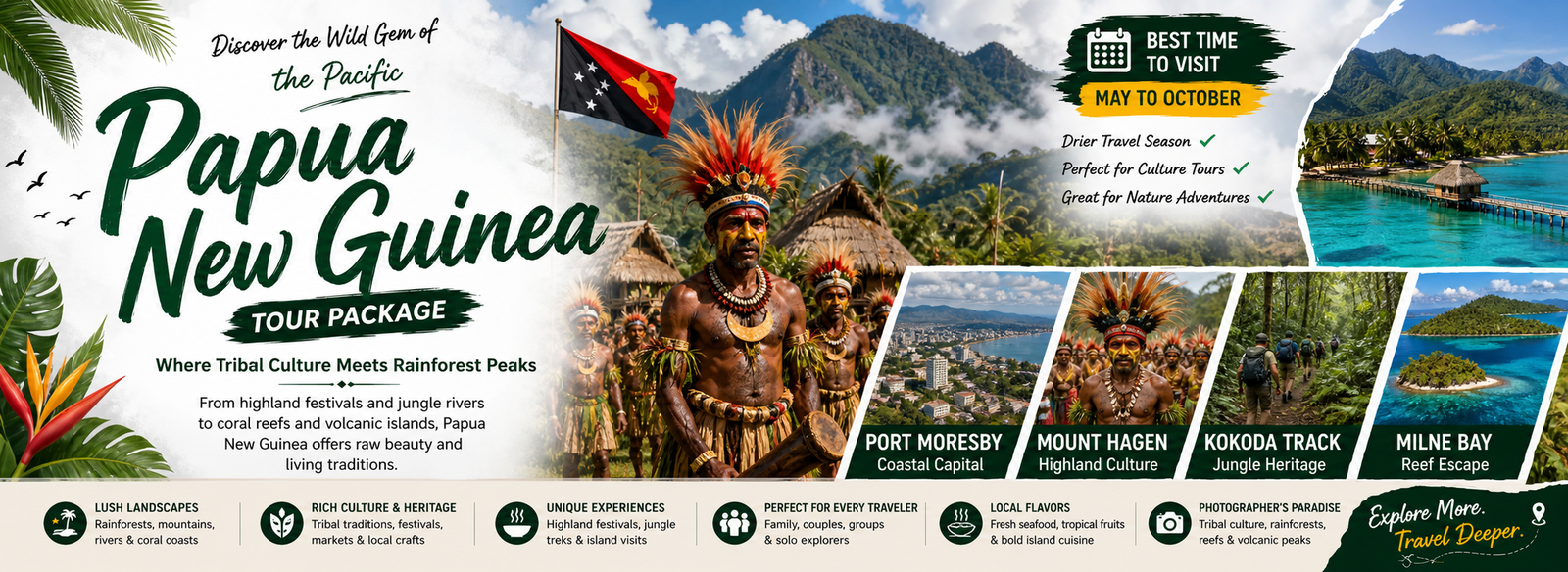
Papua New Guinea is one of the most culturally rich and adventurous destinations in the Pacific. It is famous for its tribal traditions, dramatic landscapes, active volcanoes, remote villages, coral reefs, waterfalls, mountains, and historic World War II sites. It is not a typical easy holiday destination, but it is deeply rewarding for experienced travellers, photographers, divers, trekkers, cultural explorers, and adventure seekers. Major highlights include Port Moresby, Kokoda Track, Mount Hagen, Sepik River, Tufi, Rabaul, Madang, Milne Bay, Goroka, and the Highlands.
Best Months: May to October
Good Months: April and November
Rainiest Months: December-March
Best for Sightseeing: May-October
Best for Trekking: June-September
Best for Diving: May-November, depending on region and sea conditions
Best for Cultural Festivals: July-September
Best for Birdwatching: May-October
Best for Photography: May-October and during cultural festival season
Solo Travelers: 🟨⭐⭐⭐
Couples: 🟨⭐⭐⭐
Families: 🟧⭐⭐
Friends / Groups: 🟨⭐⭐⭐
Honeymooners: 🟧⭐⭐
Senior Citizens: 🟧⭐⭐
Adventure Seekers: 🟩⭐⭐⭐⭐⭐
Luxury Travelers: 🟨⭐⭐⭐
Budget Travelers: 🟨⭐⭐⭐
Recommended Stay: 7-12 Days
Weekend Trip Possible? No, Papua New Guinea is a long-haul and logistically complex destination from India.
Best Plan: First-time travellers can combine Port Moresby, a cultural Highlands experience, Madang or Tufi for coastal scenery, and Rabaul or Milne Bay for history and diving. Experienced trekkers can plan the Kokoda Track separately with a licensed operator.
The primary way to reach Papua New Guinea from India is by air through international transit hubs.
Main International Airport:
✈️ Jacksons International Airport, Port Moresby
Other Important Airports:
✈️ Mount Hagen Airport
✈️ Lae Nadzab Airport
✈️ Madang Airport
✈️ Tokua Airport near Rabaul
✈️ Gurney Airport near Alotau
Major Tourist Gateway:
✈️ Port Moresby
There are no direct flights from India to Papua New Guinea. Indian travellers usually need connecting flights through Singapore, Manila, Hong Kong, Australia, or other Asia-Pacific routes, depending on airline schedules.
Travellers should check transit visa rules carefully, especially when connecting through countries that may require transit permission for Indian passport holders.
Indian passport holders need a valid visa or electronic visa before travelling to Papua New Guinea. Visa-on-arrival should not be assumed for Indian tourists.
Common Tourist Visa: Visitor visa or eVisa, generally applied online through Papua New Guinea’s official immigration system.
Typical requirements include:
• Valid passport with at least 6 months validity
• Completed visa or eVisa application
• Recent photograph
• Return or onward ticket
• Confirmed accommodation details
• Travel itinerary
• Proof of sufficient funds
• Bank statements or income documents
• Travel insurance strongly recommended
• Health documents if requested
• Transit visa if required by connecting country
• Customs and quarantine declaration on arrival
Papua New Guinea has biosecurity rules, so food, plants, seeds, animal products, and outdoor equipment may need to be declared. Travellers should also check local security conditions before finalizing the itinerary.
💰 Budget Traveler: ₹6,500-₹11,000 per day
💰 Mid-Range Traveler: ₹13,000-₹25,000 per day
💰 Luxury Traveler: ₹35,000+ per day
💰 Round-Trip Flights from India: ₹80,000-₹1,80,000+ per person, depending on route, season, airline, and booking time
💰 Domestic Flights: ₹8,000-₹30,000+ per sector, depending on destination and availability
💰 Guided Treks / Cultural Tours: ₹12,000-₹35,000+ per day, depending on operator, permits, guides, and logistics
💰 Visa Cost: Usually starts around ₹4,200+ and varies by visa type and official processing rules
Tip: Papua New Guinea can become expensive because domestic flights, guided tours, remote lodges, security arrangements, and specialist activities add up quickly. Book through experienced operators and avoid overpacking the itinerary.
Papua New Guinea has a tropical climate, with hot and humid coastal areas and cooler conditions in the Highlands.
Seasonal Overview
☀️ Drier Season: May-October
🌧️ Wetter Season: November-April
🌸 Best Outdoor Season: May-October
🌤️ Average temperatures: Coastal areas are usually warm and humid, often around 24°C to 32°C. Highland areas such as Mount Hagen and Goroka are cooler, especially at night. Rain can occur year-round, but travel is usually easier during the drier months.
Packing Essentials
• Lightweight cotton clothes
• Warm layers for the Highlands
• Comfortable hiking shoes
• Rain jacket
• Swimwear
• Reef-safe sunscreen
• Sunglasses
• Hat or cap
• Mosquito repellent
• Reusable water bottle
• Waterproof phone pouch
• Power bank
• Basic medicines and prescriptions
• Travel insurance documents
📍 Kokoda Track
📍 Port Moresby Nature Park
📍 National Museum and Art Gallery, Port Moresby
📍 Mount Hagen
📍 Sepik River
📍 Tufi Fjords
📍 Rabaul Volcanoes
📍 Tavurvur Volcano
📍 Madang
📍 Milne Bay
📍 Goroka
📍 Tari Basin
📍 Varirata National Park
📍 Kimbe Bay
📍 Duke of York Islands
📍 Baining Fire Dance area
📍 Bomana War Cemetery
📍 Lake Kutubu
📍 Louisiade Archipelago
📍 Mount Wilhelm
✅ Trek the Kokoda Track with a licensed operator
✅ Attend the Mount Hagen Cultural Show
✅ Visit the Goroka Show if travelling during festival season
✅ Cruise or explore the Sepik River
✅ Dive in Kimbe Bay, Milne Bay, Tufi, or Madang
✅ Visit World War II sites and memorials
✅ Explore Rabaul’s volcanic landscapes
✅ See traditional tribal performances respectfully
✅ Go birdwatching for birds of paradise
✅ Visit Port Moresby Nature Park
✅ Experience village stays with trusted local operators
✅ Explore Tufi’s fjords and coastal scenery
✅ Photograph Highlands culture and landscapes
✅ Visit local markets with guidance
✅ Learn about Papua New Guinea’s art, masks, and carvings
Must-Try Foods
🍽️ Mumu
🍽️ Fresh Fish
🍽️ Grilled Seafood
🍽️ Sago
🍽️ Taro
🍽️ Sweet Potato
🍽️ Yam
🍽️ Coconut-based dishes
🍽️ Kaukau
🍽️ Chicken with greens
🍽️ Tropical fruits
🍽️ Highland coffee
🍽️ Simple rice and curry-style meals in towns
Papua New Guinean cuisine is based on root vegetables, fresh seafood, greens, coconut, sago, pork, chicken, and tropical produce. Indian food is limited outside major towns, so vegetarian travellers should plan ahead, inform hotels and tour operators in advance, and carry permitted packaged snacks.
Accommodation options vary widely by region.
🏨 Hotels
🏡 Guesthouses
✨ Boutique Lodges
🛏️ Budget Lodges
🏕️ Trekking Guesthouses
🏖️ Coastal Resorts
🌿 Eco Lodges
🤿 Dive Resorts
🏔️ Highlands Lodges
Best Areas to Stay
• Port Moresby: Best for airport access, business hotels, museums, and transit
• Mount Hagen: Best for Highlands culture and festival access
• Goroka: Best for cultural shows and Highlands scenery
• Madang: Best for coastal scenery, diving, and relaxed stays
• Tufi: Best for fjords, diving, and boutique coastal lodges
• Rabaul / Kokopo: Best for volcanoes and World War II history
• Alotau / Milne Bay: Best for diving, island scenery, and cultural tours
• Tari: Best for Huli culture and birdwatching with experienced operators
Accommodation should be booked carefully, especially in remote regions. Confirm transfers, meals, security arrangements, electricity, Wi-Fi, and tour support before arrival.
✈️ Domestic flights are the most important way to travel between major regions.
🚗 Private vehicles with drivers are commonly used for tourist movement.
🚐 Hotel transfers and tour vehicles are recommended.
🚕 Taxis are available in some cities but should be arranged through hotels or trusted operators.
🚌 Public minibuses exist but are not usually recommended for tourists.
🚤 Boats are used for islands, rivers, diving areas, and coastal destinations.
🚶 Trekking is required for routes such as Kokoda Track and some village areas.
Driving Side: Left
Papua New Guinea’s road network is limited, and Port Moresby is not connected by road to many major towns. Domestic flights, trusted drivers, boats, and guided tours are essential for most itineraries.
Overall Safety: 🟨⭐⭐⭐
Solo Female Travelers: Solo female travel requires extra caution. Independent travel is generally not recommended in many areas. It is safer to travel with trusted local operators, guided tours, hotel-arranged transport, and secure accommodation.
Common Challenges
• Violent crime risk in major cities
• Carjacking and armed robbery in some areas
• Civil unrest and tribal fighting in some provinces
• Limited medical facilities outside major centres
• Poor road conditions
• Domestic flight delays
• Malaria and mosquito-borne illnesses
• Strong currents and diving risks
• Unexploded World War II ordnance in some areas
• Limited mobile coverage in remote areas
• Security concerns at night
Important
Avoid walking alone at night, use hotel-arranged transport, avoid public demonstrations, follow official travel advisories, use experienced operators, carry travel insurance with medical evacuation cover, and check local conditions before visiting Highlands or remote provinces.
📶 Mobile coverage is available in Port Moresby, Lae, Mount Hagen, Madang, Kokopo, and other main towns.
🌐 Internet is available in hotels, offices, airports, and some cafes, but speed and reliability can vary.
Recommended
• Buy a local SIM or eSIM where available
• Download offline maps before travel
• Carry a power bank
• Save hotel, airline, tour operator, and emergency contacts offline
• Inform family about possible network gaps
• Carry printed copies of important documents
• Do not rely fully on real-time internet in remote areas
Remote islands, trekking routes, and village areas may have limited or no connectivity.
Popular Souvenirs
🛍️ Tribal masks
🛍️ Wood carvings
🛍️ Bilum bags
🛍️ Traditional baskets
🛍️ Handmade jewellery
🛍️ Local paintings
🛍️ Sepik River carvings
🛍️ Highland coffee
🛍️ Woven crafts
🛍️ Drums and cultural crafts from ethical sellers
🛍️ Shell-inspired crafts from responsible sources
🛍️ Festival handicrafts
Best Shopping Areas
• Port Moresby craft markets
• National Museum gift areas where available
• Mount Hagen markets with guidance
• Goroka cultural market areas
• Madang local markets
• Sepik River craft villages through trusted tours
• Hotel and lodge boutiques
Buy responsibly and avoid products made from protected wildlife, endangered marine life, restricted shells, or items that may be difficult to export legally.
Best Photo Spots
📸 Mount Hagen Cultural Show
📸 Goroka Show
📸 Sepik River villages
📸 Tufi Fjords
📸 Rabaul volcanoes
📸 Kokoda Track
📸 Port Moresby Nature Park
📸 Varirata National Park
📸 Madang coastline
📸 Milne Bay islands
📸 Tari Highlands
📸 Bird of paradise viewing areas
📸 Bomana War Cemetery
📸 Kimbe Bay
📸 Traditional markets with permission
Photography Highlights
Papua New Guinea is extraordinary for cultural photography, festival portraits, rainforest scenes, diving, volcanoes, remote villages, birdwatching, traditional art, World War II history, and documentary-style travel content. Always ask permission before photographing people, ceremonies, villages, markets, and sacred or cultural objects.
Papua New Guinea is better suited to adventurous families with older children rather than easy family holidays.
👨👩👧👦 Cultural learning
👨👩👧👦 Wildlife and birdwatching
👨👩👧👦 Nature parks
👨👩👧👦 World War II history
👨👩👧👦 Coastal scenery
👨👩👧👦 Guided village visits
👨👩👧👦 Diving and snorkelling for older children
👨👩👧👦 Highlands culture with trusted operators
Families should avoid independent travel and choose secure hotels, guided transport, and reputable tour companies. For young children or senior family members, medical access and transport reliability must be carefully considered.
Accessibility infrastructure is limited in Papua New Guinea.
Helpful Features
• Airport assistance may be available on request
• Some larger hotels in Port Moresby may offer accessible rooms
• Private transfers can be arranged
• Guided tours can help reduce logistical difficulty
• Main city hotels offer more support than remote lodges
Challenges Include
• Limited wheelchair-accessible infrastructure
• Uneven roads and paths
• Limited sidewalks
• Remote lodges may have stairs, rough ground, or boat access
• Trekking routes are physically demanding
• Limited accessible public transport
• Medical and mobility support is limited outside major centres
Accessibility varies greatly by hotel, region, and activity, so travellers should confirm room access, bathroom facilities, vehicle type, medical support, and activity difficulty before booking.
🌱 Respect local customs, clans, and village protocols
🌱 Travel with community-approved guides
🌱 Ask permission before taking photos
🌱 Support local artisans and village-based tourism
🌱 Do not remove shells, coral, wildlife, or cultural objects
🌱 Respect sacred sites and ceremonial spaces
🌱 Reduce plastic waste
🌱 Carry a reusable water bottle
🌱 Use reef-safe sunscreen where suitable
🌱 Follow trekking and conservation rules
🌱 Treat porters and guides fairly on treks
🌱 Avoid disturbing World War II relics
🌱 Choose responsible dive, cultural, and eco-tour operators
✅ Pros
• One of the world’s richest cultural destinations
• Excellent for adventure and offbeat travel
• Incredible tribal festivals and traditions
• World-class diving in several regions
• Strong World War II history
• Beautiful mountains, rainforests, islands, and volcanoes
• Unique birdwatching opportunities
• Authentic local experiences
• Great for photographers and researchers
• Less commercialized than many destinations
❌ Cons
• Safety concerns in several areas
• Not ideal for independent travel
• Long and expensive travel from India
• Limited tourism infrastructure
• Domestic transport can be costly
• Medical facilities are limited outside main centres
• Visa required for Indian citizens
• Internet can be unreliable in remote areas
• Some regions require specialist planning
• Not suitable for casual luxury holidays
Official Languages: English, Tok Pisin, Hiri Motu, and Papua New Guinean Sign Language
Widely Spoken Languages: Tok Pisin, English, Hiri Motu, and hundreds of local languages
Time Zone: Papua New Guinea Time; Bougainville observes a separate time zone
Country Code: +675
Power Plug: Type I
Capital City: Port Moresby
Major Tourist Areas: Port Moresby, Mount Hagen, Goroka, Sepik River, Kokoda Track, Madang, Tufi, Rabaul, Milne Bay, Tari, Kimbe Bay
Nearest International Airport: Jacksons International Airport, Port Moresby
Driving Side: Left
Emergency Numbers: Police 000, Ambulance 111, Fire 110 in many areas; confirm local emergency contacts with your hotel
Day 1
Arrive in Port Moresby. Check in to a secure hotel, rest, and visit Port Moresby Nature Park or the National Museum if time allows.
Day 2
Explore Port Moresby with a trusted guide, including Bomana War Cemetery, markets, and cultural sites.
Day 3
Fly to Mount Hagen or Goroka. Check in to a lodge and experience Highlands scenery and local culture.
Day 4
Join a guided cultural village visit or attend a festival if travelling during show season.
Day 5
Fly to Madang, Tufi, or Rabaul depending on your interest. Relax and enjoy coastal views or volcanic landscapes.
Day 6
Enjoy diving, snorkelling, World War II sites, fjords, or local island experiences with a trusted operator.
Day 7
Return to Port Moresby for your international departure, keeping buffer time for domestic flight delays.
Note: A 7-day trip gives only a compact introduction. For Kokoda Track, Sepik River, Tufi diving, or deeper Highlands travel, 10-14 days or more is better.
✔️ Apply for the visa or eVisa before travel
✔️ Check transit visa rules for all connecting countries
✔️ Use reputable local tour operators
✔️ Avoid independent night travel
✔️ Book hotel-arranged transport
✔️ Keep buffer time for domestic flights
✔️ Carry travel insurance with medical evacuation cover
✔️ Take malaria precautions after medical advice
✔️ Carry mosquito repellent and sunscreen
✔️ Dress modestly in villages and cultural areas
✔️ Ask permission before taking photos
✔️ Carry cash backup because card access may be limited outside cities
✔️ Do not touch World War II relics or unexploded objects
✔️ Monitor official travel advisories before and during the trip
Overall Rating: 🟨⭐⭐⭐ (7.2/10)
Best For: Adventure seekers, cultural explorers, divers, trekkers, photographers, birdwatchers, researchers, World War II history lovers, and experienced travellers from India looking for a rare and powerful destination.
Who Should Skip: First-time international travellers, luxury honeymooners wanting easy resort travel, families with very young children, solo travellers uncomfortable with security planning, nightlife seekers, and travellers wanting smooth public transport.
Worth Visiting?
✅ Papua New Guinea is worth visiting for travellers who want raw adventure, deep culture, remote landscapes, diving, trekking, and one of the most unique travel experiences in the world. It is not an easy destination, and safety planning is essential, but for experienced travellers with the right guide and itinerary, it can be unforgettable.
📍 Location: Melanesia / South Pacific / Oceania
🌤️ Best Time: May-October
🗓️ Ideal Duration: 7-12 Days
💰 Budget Range: ₹6,500-₹35,000+ per day
🏔️ Best For: Culture, Trekking, Diving, Festivals, Birdwatching, History and Adventure Travel
✈️ Nearest Airport: Jacksons International Airport, Port Moresby
🍽️ Must-Try Food: Mumu, Fresh Fish, Sago, Taro, Kaukau and Highland Coffee
📸 Best Photo Spot: Mount Hagen Cultural Show, Sepik River, Tufi Fjords, Rabaul and Kokoda Track
🟨⭐⭐⭐ Overall Rating: 7.2/10
🌍 Why Visit? Papua New Guinea offers extraordinary tribal culture, rainforest mountains, remote islands, diving, volcanoes, World War II history, and authentic adventure experiences, making it one of the most unique destinations in Oceania for experienced Indian travellers.


Login to continue your travel journey with us