
Destination Name: Mali
Region: West Africa
Status: Sovereign Country
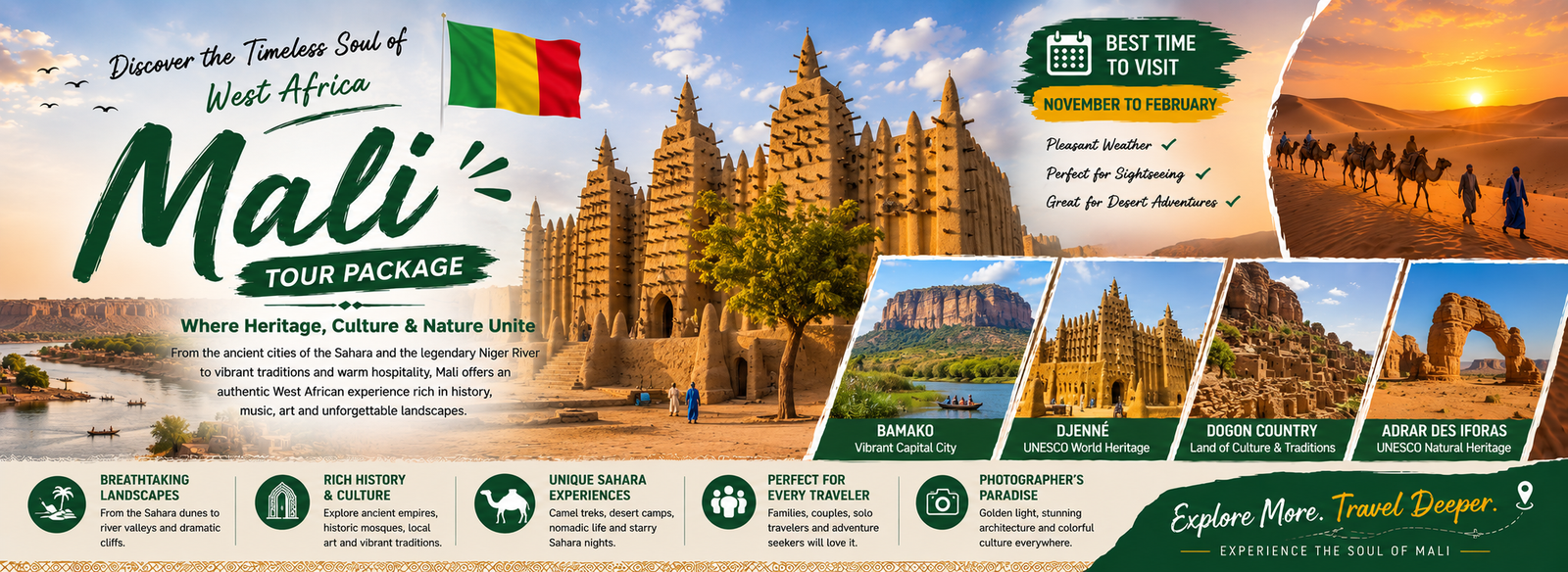
Famous For: Timbuktu, ancient Islamic scholarship, Sahara Desert, Niger River, traditional mud architecture, rich musical heritage, and historic trading empires.
Mali is one of Africa’s most historically significant nations, once serving as the heart of powerful West African empires that controlled trans-Saharan trade routes. Famous for the legendary city of Timbuktu, ancient mosques, vibrant cultural traditions, and remarkable desert landscapes, Mali offers a fascinating blend of history, culture, and natural beauty. The country is also renowned worldwide for its music, art, and centuries-old traditions that continue to influence African culture today.
Best Months: November to February
Good Months: October and March
Hottest Period: April–June
Rainy Season: June–September
Best for Cultural Exploration: November–February
Best for Photography: November–February
Best for Historical Sites: November–March
Best for Desert Travel: November–February
Solo Travelers: 🟨⭐⭐
Couples: 🟨⭐⭐
Families: 🟨⭐
Friends / Groups: 🟨⭐⭐⭐
Honeymooners: 🟨⭐
Senior Citizens: 🟨⭐
Adventure Seekers: 🟨⭐⭐⭐⭐
Luxury Travelers: 🟨⭐
Budget Travelers: 🟨⭐⭐⭐
Recommended Stay: 7–10 Days
Weekend Trip Possible? Not recommended.
Best Plan: Spend 7–10 days exploring Bamako, historical sites, cultural attractions, Niger River regions, and traditional communities, subject to current travel and security conditions.
The primary way to reach Mali is by air.
Main International Airport:
✈️ Modibo Keita International Airport (Bamako)
Major Tourist Gateway:
✈️ Bamako
Domestic Transportation: Primarily road-based, with limited domestic air services.
Road Network: Connects major urban centers and regional destinations.
Most visitors require a visa before entering Mali.
Typical requirements include:
• Valid passport
• Return or onward travel ticket
• Accommodation confirmation
• Proof of sufficient funds
• Travel insurance
• Yellow Fever Vaccination Certificate
Travelers should verify the latest visa requirements and travel advisories before departure.
💰 Budget Traveler: ₹3,000–₹6,000 per day
💰 Mid-Range Traveler: ₹8,000–₹18,000 per day
💰 Luxury Traveler: ₹25,000+ per day
Note: Security arrangements, guides, and organized tours may increase costs substantially.
Mali experiences a predominantly hot and dry climate.
☀️ Cool Dry Season: November–February
🌤️ Hot Season: March–May
🌧️ Rainy Season: June–September
🌡️ Average temperatures range from 18°C to 42°C.
• Lightweight breathable clothing
• Sunglasses
• Sunscreen
• Hat
• Comfortable walking shoes
• Insect repellent
• Reusable water bottle
• Camera equipment
📍 Timbuktu
📍 Bamako
📍 Great Mosque of Djenné
📍 Djenné
📍 Niger River
📍 National Museum of Mali
📍 Mopti
📍 Bandiagara Escarpment
📍 Ségou
📍 Siby
✅ Explore historic Timbuktu
✅ Visit ancient mosques
✅ Discover traditional mud architecture
✅ Experience Malian music and culture
✅ Explore markets and craft centers
✅ Cruise the Niger River
✅ Visit UNESCO heritage sites
✅ Learn about the Mali Empire
✅ Photography tours
✅ Cultural village experiences
🍽️ Tiguadege Na
🍽️ Riz Gras
🍽️ Jollof Rice
🍽️ Brochettes
🍽️ Fufu
🍽️ Tô
🍽️ Grilled Fish
🍽️ Traditional Mint Tea
Malian cuisine combines West African flavors with local ingredients and traditional cooking techniques.
Mali offers:
🏨 Hotels
🏡 Guesthouses
🛏️ Budget Lodges
🏠 Local Inns
🌿 Cultural Guesthouses
• Bamako
• Mopti
• Ségou
• Djenné
Accommodation options outside major cities are limited.
🚗 Private vehicles are commonly used.
🚕 Taxis operate in major cities.
🚌 Buses connect major towns.
🚐 Organized tours are recommended for visitors.
Driving Side: Right
Road conditions vary significantly depending on the region.
Overall Safety: 🟨⭐
Solo Female Travelers: Not generally recommended due to security concerns.
• Security risks in several regions
• Limited tourism infrastructure
• Extreme temperatures
• Long travel distances
• Limited healthcare facilities outside Bamako
Travelers should carefully review official government travel advisories before planning travel to Mali.
📶 Mobile coverage is available in major cities and towns.
🌐 Internet access is available in urban areas and larger hotels.
• Purchase a local SIM card
• Download offline maps
• Carry power banks
• Keep emergency contact information available
🛍️ Bogolan (Mud Cloth)
🛍️ Handmade Jewelry
🛍️ Wood Carvings
🛍️ Leather Crafts
🛍️ Traditional Masks
🛍️ Musical Instruments
🛍️ Handwoven Textiles
🛍️ Local Artwork
📸 Great Mosque of Djenné
📸 Timbuktu
📸 Bandiagara Escarpment
📸 Niger River
📸 Bamako Markets
📸 Traditional Villages
📸 Mopti Port
📸 Ségou
Historic mud-brick architecture, cultural festivals, desert landscapes, river scenes, traditional villages, and vibrant markets provide exceptional photography opportunities.
Mali is generally not recommended for family tourism due to security considerations and limited tourism infrastructure.
Families should carefully review current travel advisories before planning a visit.
Accessibility infrastructure remains limited.
Challenges include:
• Historic sites
• Uneven roads
• Limited accessible transportation
• Rural travel conditions
Facilities vary considerably throughout the country.
🌱 Support local artisans
🌱 Respect cultural traditions
🌱 Preserve historical monuments
🌱 Reduce plastic waste
🌱 Support community tourism
🌱 Respect religious and cultural sites
• Rich historical significance
• Unique UNESCO heritage sites
• Fascinating cultural traditions
• Renowned music heritage
• Authentic local experiences
• Historic desert trade routes
• Significant security concerns
• Limited tourism infrastructure
• Extreme climate conditions
• Long travel distances
• Limited luxury accommodation
Official Language: French
Widely Spoken Languages: Bambara, Fulfulde, Songhai and several local languages
Time Zone: Greenwich Mean Time (UTC+0)
Country Code: +223
Power Plug: Type C and E
Capital City: Bamako
Nearest International Airport: Modibo Keita International Airport
Arrive in Bamako and explore the capital.
Visit the National Museum of Mali and local markets.
Travel to Ségou and cultural attractions.
Explore Djenné and the Great Mosque.
Niger River excursion.
Cultural experiences and traditional villages.
Return to Bamako and depart.
✔️ Review official travel advisories before booking
✔️ Travel with experienced local guides
✔️ Carry sufficient drinking water
✔️ Respect local customs and traditions
✔️ Purchase comprehensive travel insurance
✔️ Keep copies of important documents
✔️ Avoid unnecessary travel after dark
✔️ Arrange transportation in advance
Overall Rating: 🟨⭐⭐⭐ (6.0/10)
Best For: History enthusiasts, cultural travelers, photographers, researchers, and experienced adventure travelers.
Who Should Skip: Families, luxury travelers, first-time Africa visitors, and travelers seeking developed tourism infrastructure.
Worth Visiting?
✅ Mali possesses some of Africa’s richest cultural and historical treasures, including Timbuktu and Djenné. However, travelers should carefully evaluate current security conditions and official travel advisories before planning a visit.
📍 Location: West Africa
🌤️ Best Time: November–February
🗓️ Ideal Duration: 7–10 Days
💰 Budget Range: ₹3,000–₹25,000+ per day
🏛️ Best For: History, Culture & Heritage Tourism
✈️ Nearest Airport: Modibo Keita International Airport (Bamako)
🍽️ Must-Try Food: Tiguadege Na, Riz Gras & Brochettes
📸 Best Photo Spot: Great Mosque of Djenné
🟨⭐⭐⭐ Overall Rating: 6.0/10
🌍 Why Visit? Mali offers legendary historical sites, ancient Islamic scholarship, remarkable mud-brick architecture, vibrant cultural traditions, and a deep connection to the heritage of West Africa’s great empires.


Login to continue your travel journey with us