
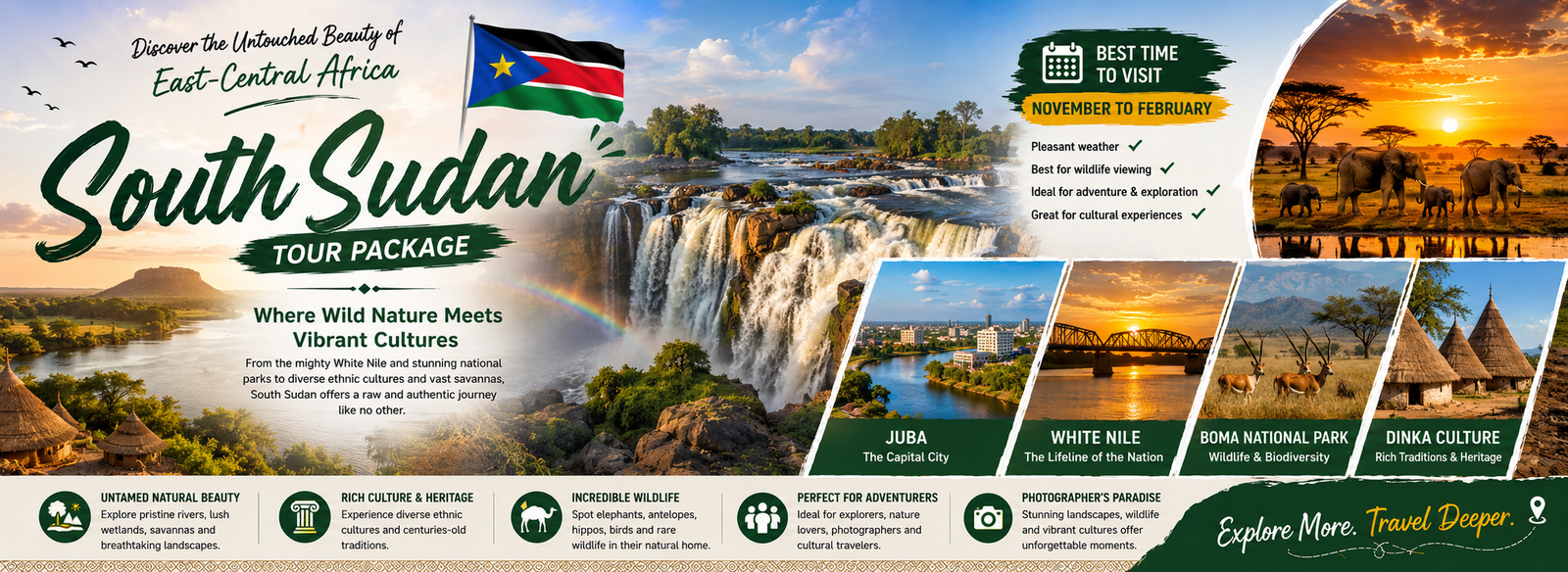
Destination Name: South Sudan
Region: East-Central Africa
Status: Sovereign Country
Famous For: The White Nile, vast wetlands, tribal cultures, wildlife migrations, Sudd Wetlands, traditional communities, and some of Africa’s least-explored wilderness areas.
South Sudan is the world’s youngest country, gaining independence in 2011. It offers adventurous travelers a rare opportunity to experience authentic African cultures, vast wetlands, remote wildlife habitats, and unique tribal traditions. The country remains largely untouched by mass tourism, making it appealing for experienced explorers and cultural enthusiasts seeking off-the-beaten-path destinations.
Best Months: December to March
Good Months: November and April
Rainy Season: May to October
Best for Wildlife Viewing: December–March
Best for Cultural Exploration: December–March
Best for Photography: December–March
Best for River Excursions: November–April
Best for Budget Travelers: May–October
Solo Travelers: 🟨⭐
Couples: 🟨⭐⭐
Families: 🟨⭐
Friends / Groups: 🟨⭐⭐⭐
Honeymooners: 🟨⭐
Senior Citizens: 🟨⭐
Adventure Seekers: 🟨⭐⭐⭐⭐⭐
Luxury Travelers: 🟨⭐
Budget Travelers: 🟨⭐⭐⭐
Recommended Stay: 5–8 Days
Weekend Trip Possible? Not recommended.
Best Plan: Spend 6–8 days exploring Juba, cultural communities, the White Nile region, wildlife areas, and selected natural attractions with local guides.
The primary way to reach South Sudan is by air.
Main International Airport:
✈️ Juba International Airport
Other Airports:
✈️ Malakal Airport
✈️ Wau Airport
✈️ Rumbek Airport
Road Connectivity: Limited and highly dependent on weather conditions.
Domestic Flights: Often used due to long distances and road conditions.
Most visitors require a visa to enter South Sudan.
Typical requirements include:
• Valid passport
• Return or onward travel ticket
• Accommodation confirmation
• Proof of sufficient funds
• Travel insurance
• Additional travel permits may be required for certain regions
Travelers should always verify the latest visa requirements before departure.
💰 Budget Traveler: ₹3,000–₹6,000 per day
💰 Mid-Range Traveler: ₹8,000–₹18,000 per day
💰 Luxury Traveler: ₹25,000+ per day
Note: Transportation and security arrangements can significantly increase travel costs.
South Sudan experiences a tropical climate with distinct dry and rainy seasons.
☀️ Dry Season: December–April
🌧️ Rainy Season: May–October
🔥 March and April are generally the hottest months.
🌡️ Temperatures often range between 25°C and 40°C.
• Lightweight clothing
• Comfortable walking shoes
• Sunscreen
• Hat
• Sunglasses
• Insect repellent
• Rain jacket (during rainy season)
• Reusable water bottle
📍 Sudd Wetlands
📍 White Nile River
📍 Juba
📍 Nimule National Park
📍 Boma National Park
📍 Bandingilo National Park
📍 Jebel Kujur
📍 Mongalla
📍 Traditional Tribal Villages
📍 Imatong Mountains
✅ Explore the Sudd Wetlands
✅ Experience traditional tribal cultures
✅ Visit the White Nile River
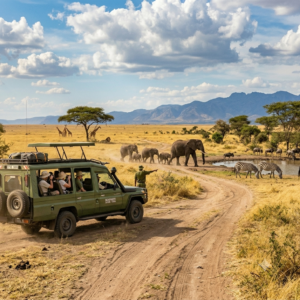
✅ Wildlife viewing in national parks
✅ Photography expeditions
✅ Cultural village visits
✅ Birdwatching
✅ River excursions
✅ Hiking in the Imatong Mountains
✅ Learn about local traditions
🍽️ Kisra
🍽️ Asida
🍽️ Ful Medames
🍽️ Grilled Goat
🍽️ Fish Dishes
🍽️ Millet-Based Meals
🍽️ Traditional Stews
🍽️ Local Flatbreads
South Sudanese cuisine is simple, hearty, and influenced by East African and Sudanese culinary traditions.
South Sudan offers:
🏨 Hotels
🏡 Guesthouses
🛏️ Budget Lodges
🏠 Serviced Apartments
• Juba
• Nimule
• Wau
• Malakal
Most accommodation options are concentrated in major urban centers.
🚗 Private vehicles are commonly used.
🚕 Taxis operate mainly in Juba.
✈️ Domestic flights connect major regions.
🚌 Limited public transportation is available.
Driving Side: Right
Road conditions can vary significantly, especially during the rainy season.
Overall Safety: 🟨⭐
Solo Female Travelers: Not generally recommended due to security concerns.
• Security risks in some regions
• Limited tourism infrastructure
• Transportation challenges
• Seasonal flooding
• Limited healthcare facilities
Travelers should carefully review official government travel advisories and consult local authorities before planning any trip.
📶 Mobile coverage is available in major cities.
🌐 Internet access exists but can be slow and unreliable.
• Purchase a local SIM card
• Download offline maps
• Carry power banks
• Keep printed copies of important documents
🛍️ Handmade Beadwork
🛍️ Tribal Crafts
🛍️ Traditional Jewelry
🛍️ Wood Carvings
🛍️ Handwoven Baskets
🛍️ Local Artwork
🛍️ Traditional Textiles
🛍️ Cultural Handicrafts
📸 Sudd Wetlands
📸 White Nile River
📸 Boma National Park
📸 Bandingilo National Park
📸 Imatong Mountains
📸 Tribal Villages
📸 Juba Landscapes
📸 Wildlife Migration Areas
Traditional cultures, wetlands, wildlife migrations, river scenery, and remote landscapes provide unique photography opportunities.
South Sudan is generally not recommended for family vacations due to infrastructure and security challenges.
Families considering travel should carefully evaluate official advisories and travel conditions.
Accessibility infrastructure remains limited.
Challenges include:
• Uneven terrain
• Limited accessible transportation
• Basic infrastructure
• Remote locations
• Seasonal flooding
Accessibility services are generally limited outside major hotels.
🌱 Respect local cultures and traditions
🌱 Support community-based tourism
🌱 Reduce plastic waste
🌱 Protect wildlife habitats
🌱 Hire local guides
🌱 Respect photography permissions in villages
• Unique cultural experiences
• Untouched natural environments
• Authentic tribal traditions
• Excellent birdwatching opportunities
• Remote adventure travel
• One of Africa’s least-visited countries
• Security concerns
• Limited tourism infrastructure
• Transportation difficulties
• Seasonal flooding
• Limited healthcare facilities
Language: English
Time Zone: East Africa Time (UTC+3)
Country Code: +211
Power Plug: Type C, D and G
Capital City: Juba
Nearest International Airport: Juba International Airport
Arrive in Juba and explore the capital.
Visit local markets and cultural attractions.
White Nile River excursion.
Explore nearby communities and cultural villages.
Wildlife and birdwatching activities.
Visit selected natural attractions with local guides.
Photography, cultural experiences, and departure.
✔️ Check official travel advisories before booking
✔️ Travel with reputable local guides
✔️ Carry sufficient drinking water
✔️ Keep copies of important documents
✔️ Purchase comprehensive travel insurance
✔️ Respect local customs and traditions
✔️ Avoid unnecessary travel after dark
✔️ Monitor local developments regularly
Overall Rating: 🟨⭐⭐⭐ (5.8/10)
Best For: Experienced adventure travelers, anthropologists, photographers, cultural explorers, and off-the-beaten-path travelers.
Who Should Skip: Families, luxury travelers, first-time Africa visitors, and travelers seeking developed tourism infrastructure.
Worth Visiting?
✅ South Sudan offers fascinating cultural diversity, vast wetlands, unique wildlife habitats, and authentic experiences rarely found elsewhere. However, travelers should carefully assess current security conditions and travel advisories before making plans.
📍 Location: East-Central Africa
🌤️ Best Time: December–March
🗓️ Ideal Duration: 5–8 Days
💰 Budget Range: ₹3,000–₹25,000+ per day
🌿 Best For: Adventure, Culture & Remote Exploration
✈️ Nearest Airport: Juba International Airport
🍽️ Must-Try Food: Kisra, Asida & Grilled Goat
📸 Best Photo Spot: Sudd Wetlands & White Nile River
🟨⭐⭐⭐ Overall Rating: 5.8/10
🌍 Why Visit? South Sudan offers rare cultural encounters, vast wetlands, traditional tribal communities, and untouched wilderness for adventurous travelers seeking one of Africa’s most unexplored destinations.


Login to continue your travel journey with us