
Destination Name: Tuvalu
Region: Oceania / Polynesia / Central Pacific
Status: Sovereign Country
Famous For: Funafuti Atoll, Funafuti Conservation Area, turquoise lagoons, remote Pacific island life, low-lying coral atolls, traditional Tuvaluan culture, marine conservation, climate-change awareness, quiet beaches, birdwatching, snorkelling, and one of the world’s least-visited countries.
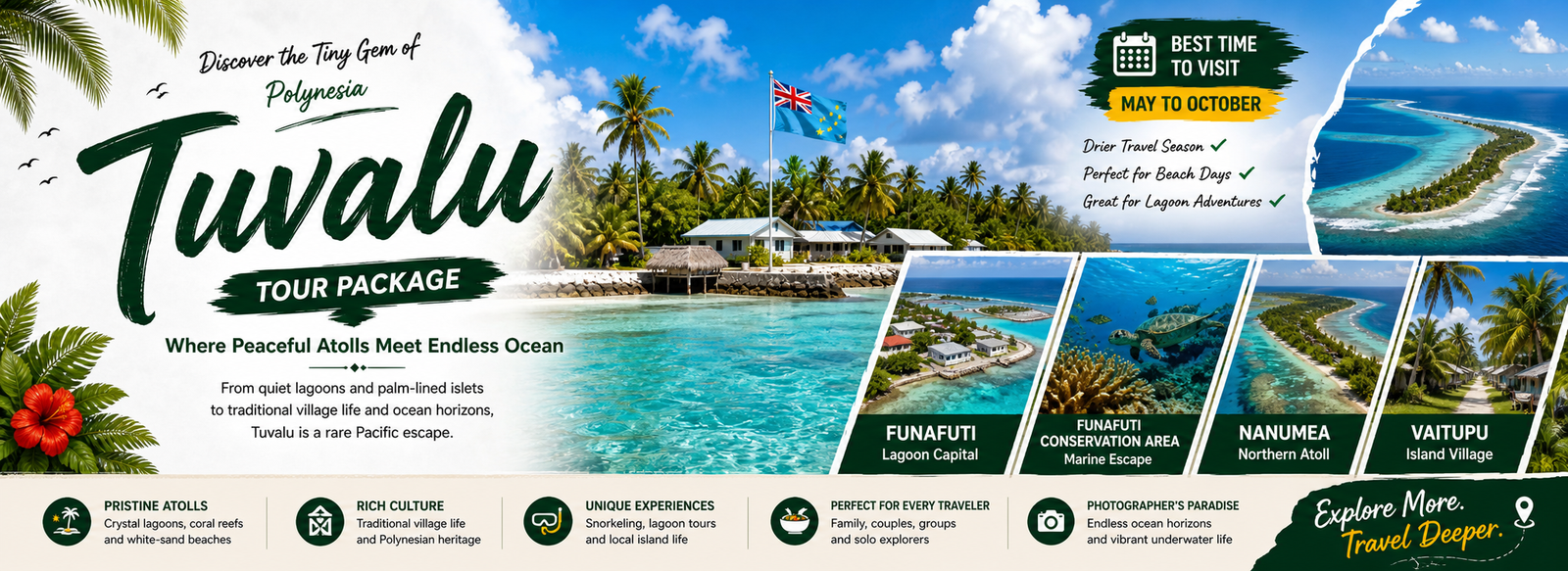
Tuvalu is a tiny and remote island nation in the Central Pacific, made up of low-lying coral atolls and reef islands. It is not a mainstream tourist destination, but it is deeply interesting for offbeat travellers, country collectors, researchers, photographers, climate-change observers, marine-life lovers, and travellers who enjoy slow, simple island experiences. Major highlights include Funafuti, Fongafale, Funafuti Conservation Area, the lagoon, outer islands such as Nanumea, Nukufetau, Nui, Vaitupu, and traditional community life.
Best Months: May to October
Good Months: April and November
Rainiest Months: November-April
Best for Sightseeing: May-October
Best for Beaches: May-October
Best for Snorkelling: May-October, depending on sea conditions
Best for Photography: May-October
Best for Cultural Visits: Year-round
Best for Budget Travel: April, May, October and November
Solo Travelers: 🟨⭐⭐⭐
Couples: 🟧⭐⭐
Families: 🟧⭐⭐
Friends / Groups: 🟨⭐⭐⭐
Honeymooners: 🟧⭐⭐
Senior Citizens: 🟧⭐⭐
Adventure Seekers: 🟨⭐⭐⭐
Luxury Travelers: 🟧⭐⭐
Budget Travelers: 🟨⭐⭐⭐
Recommended Stay: 3-6 Days
Weekend Trip Possible? No, Tuvalu is extremely remote from India and flight schedules are limited.
Best Plan: First-time travellers can base themselves in Funafuti, explore Fongafale, visit the lagoon, arrange a boat trip to Funafuti Conservation Area if available, experience local markets and community life, and keep buffer time for flight changes. Outer-island visits require much longer planning.
The primary way to reach Tuvalu from India is by air through international transit hubs.
Main International Airport:
✈️ Funafuti International Airport
Major Tourist Gateway:
✈️ Funafuti / Fongafale
There are no direct flights from India to Tuvalu. Indian travellers usually need multiple connections through Fiji, Australia, Singapore, or other Pacific routes, depending on airline schedules.
Travellers should carefully check transit visa rules, especially when connecting through countries that may require transit permission for Indian passport holders.
Indian passport holders generally need a visa on arrival or visitor permit on arrival for short stays in Tuvalu, subject to immigration approval.
Typical requirements include:
• Valid passport with at least 6 months validity
• Return or onward ticket
• Confirmed accommodation details
• Proof of sufficient funds
• Travel itinerary
• Visitor permit or visa-on-arrival fee, where applicable
• Travel insurance strongly recommended
• Transit visa if required by connecting country
• Health documents if requested
• Customs and biosecurity declaration on arrival
Tuvalu has biosecurity controls. Travellers should declare food, plants, seeds, animal products, medicines, and restricted goods correctly on arrival.
💰 Budget Traveler: ₹5,000-₹8,500 per day
💰 Mid-Range Traveler: ₹9,000-₹16,000 per day
💰 Luxury Traveler: ₹22,000+ per day, with very limited luxury options
💰 Round-Trip Flights from India: ₹1,20,000-₹2,50,000+ per person, depending on route, season, airline, and booking time
💰 Visa / Visitor Permit Fee: Around ₹5,600, subject to current official rules
💰 Boat Trips / Local Transfers: ₹2,000-₹15,000+ depending on availability, operator, fuel, destination, and sea conditions
Tip: Tuvalu is small, but reaching it can be expensive because flights are limited. Costs can also change due to fuel availability, imported goods, and limited accommodation. Book early and keep plans flexible.
Tuvalu has a hot tropical climate with warm temperatures throughout the year.
Seasonal Overview
☀️ Drier Season: May-October
🌧️ Wetter Season: November-April
🌪️ Higher Storm and Heavy Rain Risk: November-April
🌤️ Average temperatures: Tuvalu is warm year-round, generally around 26°C to 32°C. The drier season is usually more comfortable for sightseeing, lagoon trips, walking, and photography. As a low-lying island nation, Tuvalu is vulnerable to king tides, coastal flooding, drought, and climate-related impacts.
Packing Essentials
• Light cotton clothes
• Swimwear
• Reef-safe sunscreen
• Sunglasses
• Hat or cap
• Flip-flops or sandals
• Comfortable walking shoes
• Light rain jacket
• Mosquito repellent
• Reusable water bottle
• Waterproof phone pouch
• Universal travel adapter
• Power bank
• Basic medicines and prescriptions
• Travel insurance documents
📍 Funafuti Atoll
📍 Funafuti Conservation Area
📍 Fongafale
📍 Funafuti Lagoon
📍 Tuvalu Philatelic Bureau
📍 Tuvalu Women’s Handicraft Centre
📍 Funafuti Marine Conservation Area islets
📍 Vaiaku area
📍 Funafuti International Airport runway community area
📍 Government House area
📍 Local churches
📍 Local markets
📍 Nanumea
📍 Nukufetau
📍 Nui
📍 Vaitupu
📍 Nukulaelae
📍 Nanumaga
📍 Niutao
📍 Niulakita
✅ Explore Funafuti and Fongafale
✅ Visit Funafuti Conservation Area by boat if available
✅ Walk along the lagoon side of Funafuti
✅ Experience local community life
✅ Visit the Tuvalu Women’s Handicraft Centre
✅ Buy stamps or souvenirs from the Philatelic Bureau
✅ Photograph traditional island scenes respectfully
✅ Swim or snorkel in safe lagoon areas
✅ Watch sunset over the lagoon
✅ Visit local churches respectfully
✅ Learn about Tuvalu’s climate-change challenges
✅ Try local seafood and coconut-based dishes
✅ Explore the airport runway area when safe and permitted
✅ Arrange outer-island travel only with careful planning
✅ Enjoy slow travel in one of the world’s least-visited countries
Must-Try Foods
🍽️ Fresh Fish
🍽️ Grilled Seafood
🍽️ Coconut-based dishes
🍽️ Pulaka
🍽️ Taro
🍽️ Breadfruit
🍽️ Rice with fish
🍽️ Coconut crab where legally and responsibly available
🍽️ Tropical fruits where available
🍽️ Simple island barbecue
🍽️ Local tuna dishes
🍽️ Imported island-style meals
Tuvaluan cuisine is simple and shaped by island resources. Fish, coconut, pulaka, taro, breadfruit, rice, and imported staples are common. Indian food is very limited, so vegetarian travellers should plan carefully, inform accommodation in advance, and carry permitted packaged snacks while respecting biosecurity rules.
Accommodation options are very limited.
🏨 Small Hotels
🏡 Guesthouses
🛏️ Budget Lodges
🏠 Family-run Accommodation
🏝️ Simple Island Stays
🌿 Local Community Stays where available
Best Areas to Stay
• Funafuti / Fongafale: Best for airport access, accommodation, shops, offices, and local transport
• Vaiaku: Best for practical central access
• Lagoon-side areas: Best for views and quiet stays
• Outer islands: Possible only with careful advance planning and limited facilities
Accommodation standards are basic. Travellers should confirm airport transfers, air-conditioning, meals, Wi-Fi, electricity, water supply, and payment method before booking.
✈️ International flights arrive at Funafuti International Airport.
⛴️ Passenger-cargo boats connect some outer islands, but schedules are limited and may run only every few weeks.
🚤 Small boats are used for lagoon trips and conservation-area visits.
🚕 Taxis and local transport may be available in Funafuti.
🚲 Bicycles and motorbikes may be used locally where available.
🚶 Walking is practical in parts of Fongafale, but heat and limited shade should be considered.
Driving Side: Left
Transport is basic and can be affected by weather, fuel availability, sea conditions, and limited schedules. Keep buffer days before international flights.
Overall Safety: 🟨⭐⭐⭐
Solo Female Travelers: Tuvalu is generally peaceful and community-oriented, but solo female travellers should use normal precautions, avoid isolated areas at night, dress modestly in local communities, and use trusted transport.
Common Challenges
• Limited medical facilities
• Limited tourism infrastructure
• Flight delays and limited flight routes
• Fuel and electricity shortages can occur
• Coastal flooding and king tides
• Cyclone and storm risk during wetter months
• Heat, humidity, and dehydration
• Mosquito-borne illness risk
• Limited emergency response on outer islands
• Poor swimming conditions in some reef or ocean areas
• Limited internet and communication
Important
Carry travel insurance with medical evacuation cover, check weather and tide conditions, avoid unsafe swimming areas, drink safe water, use mosquito protection, and keep flexible plans due to limited transport.
📶 Mobile coverage is available in Funafuti and selected populated areas.
🌐 Internet is available in some hotels, offices, and public areas, but speed and reliability can be limited.
Recommended
• Buy a local SIM if available
• Download offline maps before arrival
• Carry a power bank
• Keep important travel documents offline
• Save hotel, airline, boat, and emergency contacts
• Inform family about possible network gaps
• Do not rely on constant internet for bookings or navigation
Outer islands may have very limited connectivity.
Popular Souvenirs
🛍️ Tuvalu stamps
🛍️ Handwoven mats
🛍️ Traditional fans
🛍️ Coconut crafts
🛍️ Local handicrafts
🛍️ Shell-inspired crafts from responsible sellers
🛍️ Woven baskets
🛍️ Island clothing
🛍️ Local artwork
🛍️ Handmade jewellery
🛍️ Postcards
🛍️ Cultural keepsakes
Best Shopping Areas
• Tuvalu Women’s Handicraft Centre
• Tuvalu Philatelic Bureau
• Local shops in Funafuti
• Small market areas
• Community craft sellers
Shopping is limited, so travellers should not expect malls or luxury retail. Buy responsibly and avoid products made from protected coral, turtle shell, endangered marine life, or restricted natural materials.
Best Photo Spots
📸 Funafuti Lagoon
📸 Funafuti Conservation Area
📸 Fongafale coastline
📸 Vaiaku area
📸 Airport runway community scenes where permitted
📸 Traditional handicraft areas
📸 Local churches with permission
📸 Sunset over the lagoon
📸 Outer island beaches where accessible
📸 Nanumea and Nukufetau atolls
📸 Lagoon-side homes and boats with permission
📸 Coconut palms and coral landscapes
📸 Community life with permission
📸 Climate-change and coastal protection areas
Photography Highlights
Tuvalu is excellent for documentary-style travel photography, remote island landscapes, lagoon views, climate-change storytelling, local culture, traditional handicrafts, and rare-country travel content. Always ask permission before photographing local people, homes, churches, ceremonies, and community spaces.
Tuvalu can be suitable for adventurous families, but it is not a typical family-holiday destination.
👨👩👧👦 Lagoon views
👨👩👧👦 Beach walks
👨👩👧👦 Cultural learning
👨👩👧👦 Handicraft shopping
👨👩👧👦 Climate-change education
👨👩👧👦 Simple island life
👨👩👧👦 Photography
👨👩👧👦 Slow travel experiences
Families should plan carefully because medical facilities, transport, food variety, and child-focused attractions are limited. Tuvalu is better for older children interested in geography, culture, remote islands, and environmental learning.
Accessibility infrastructure is very limited in Tuvalu.
Helpful Features
• Airport assistance may be available on request
• Short local transfers can be arranged through accommodation
• Funafuti is compact and easier than outer islands
• Some sightseeing can be done by vehicle or short walks
Challenges Include
• Limited wheelchair-accessible infrastructure
• Few accessible hotel rooms
• Uneven roads and paths
• Limited sidewalks
• Boat transfers may be difficult
• Limited accessible public transport
• Heat and humidity can be tiring
• Outer islands have very limited medical and mobility support
Accessibility varies greatly, so travellers should confirm room access, bathroom facilities, transport arrangements, and medical support before booking.
🌱 Respect Tuvaluan customs and community life
🌱 Dress modestly in villages and public areas
🌱 Ask permission before photographing people
🌱 Support local guesthouses, shops, and craft sellers
🌱 Do not touch coral reefs
🌱 Avoid standing on coral while snorkelling
🌱 Do not remove shells, coral, sand, or marine life
🌱 Reduce plastic waste
🌱 Carry a reusable water bottle
🌱 Conserve water and electricity
🌱 Respect local climate-change adaptation efforts
🌱 Follow conservation-area rules
🌱 Buy authentic local handicrafts responsibly
✅ Pros
• One of the world’s least-visited countries
• Unique remote Pacific island experience
• Peaceful community atmosphere
• Interesting climate-change and geography learning
• Beautiful lagoon scenery
• Funafuti Conservation Area offers marine appeal
• Good for slow travel and photography
• English is an official language
• Strong cultural authenticity
• Memorable for offbeat travellers and country collectors
❌ Cons
• Very long and expensive travel from India
• Extremely limited tourism infrastructure
• Limited accommodation choices
• Limited medical facilities
• Flight schedules are limited
• Fuel or power shortages may affect travel
• Internet can be slow or unreliable
• Food variety is limited
• Not ideal for luxury travellers
• Weather, tides, and transport limitations can affect plans
Official Languages: Tuvaluan and English
Widely Spoken Languages: Tuvaluan and English
Time Zone: Tuvalu Time
Country Code: +688
Power Plug: Type I
Capital City: Funafuti
Major Tourist Areas: Funafuti, Fongafale, Funafuti Conservation Area, Nanumea, Nukufetau, Nui, Vaitupu, Nukulaelae
Nearest International Airport: Funafuti International Airport
Driving Side: Left
Emergency Numbers: Police 911, Fire 911, Ambulance 911; confirm local emergency contacts with accommodation on arrival
Day 1
Arrive at Funafuti International Airport. Check in, rest, and take a short walk around Fongafale.
Day 2
Explore Funafuti, Vaiaku, local shops, community areas, and lagoon-side viewpoints.
Day 3
Visit the Tuvalu Women’s Handicraft Centre, Philatelic Bureau, and local markets.
Day 4
Arrange a boat trip to Funafuti Conservation Area if weather, operator availability, and permits allow.
Day 5
Enjoy lagoon photography, local culture, churches with permission, and slow island exploration.
Day 6
Spend a relaxed day learning about Tuvalu’s climate-change challenges, coastal areas, and traditional island life.
Day 7
Keep buffer time for flight changes, shop for souvenirs, and depart from Funafuti International Airport.
Note: Tuvalu can be explored in 3-5 days, but a 7-day plan gives useful buffer time because flight schedules and weather can affect travel.
✔️ Confirm visa and visitor-permit rules before booking
✔️ Check transit visa rules for every connecting country
✔️ Book accommodation early because options are limited
✔️ Keep buffer days for flight delays
✔️ Carry travel insurance with medical evacuation cover
✔️ Bring sunscreen, mosquito repellent, and basic medicines
✔️ Carry printed copies of bookings and travel documents
✔️ Download offline maps and documents
✔️ Carry cash backup because card acceptance may be limited
✔️ Dress modestly in local communities
✔️ Ask before photographing locals
✔️ Confirm boat safety before lagoon trips
✔️ Monitor tide, weather, and cyclone information
✔️ Keep expectations realistic regarding comfort and luxury
Overall Rating: 🟨⭐⭐⭐ (6.4/10)
Best For: Offbeat travellers, country collectors, researchers, photographers, climate-change observers, geography lovers, slow travellers, and experienced travellers from India looking for a rare Pacific destination.
Who Should Skip: Luxury honeymooners, travellers wanting resort infrastructure, families with young children, senior travellers needing strong medical support, nightlife seekers, and tourists looking for easy transport and many organized activities.
Worth Visiting?
✅ Tuvalu is worth visiting for travellers who value rare destinations, remote island culture, lagoon scenery, and meaningful environmental travel. It is not a conventional holiday destination, and logistics can be challenging, but its simplicity, isolation, and cultural authenticity make it memorable for the right traveller.
📍 Location: Central Pacific / Polynesia / Oceania
🌤️ Best Time: May-October
🗓️ Ideal Duration: 3-6 Days
💰 Budget Range: ₹5,000-₹22,000+ per day
🏝️ Best For: Offbeat Travel, Remote Islands, Culture, Climate Awareness, Lagoons and Slow Travel
✈️ Nearest Airport: Funafuti International Airport
🍽️ Must-Try Food: Fresh Fish, Coconut Dishes, Pulaka, Taro, Breadfruit and Grilled Seafood
📸 Best Photo Spot: Funafuti Lagoon, Funafuti Conservation Area, Fongafale and Outer Atolls
🟨⭐⭐⭐ Overall Rating: 6.4/10
🌍 Why Visit? Tuvalu is one of the world’s smallest and least-visited countries, offering remote Pacific island life, lagoon scenery, traditional culture, marine conservation, and a rare travel experience for visitors who prefer authenticity and meaning over luxury.


Login to continue your travel journey with us