
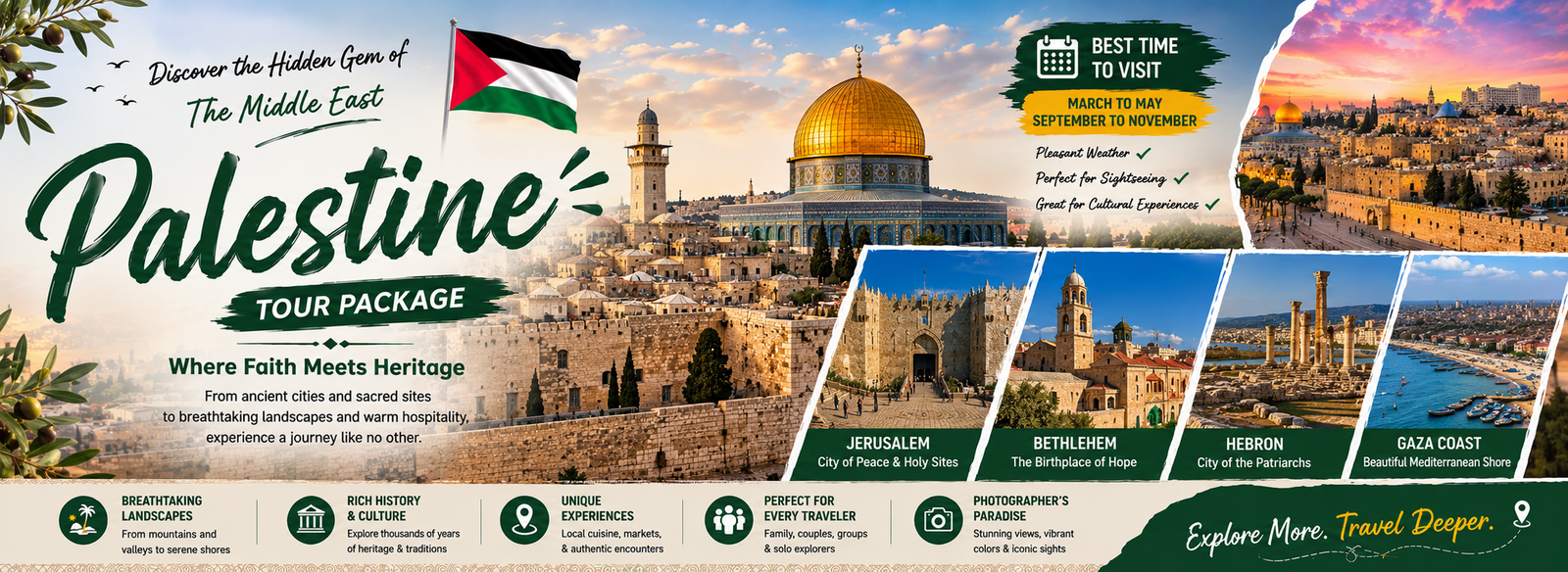
Destination Name: State of Palestine
Region: Middle East (Western Asia)
Status: State with limited international recognition
Famous For: Bethlehem, Church of the Nativity, Jerusalem’s religious significance, Jericho, Hebron, Dead Sea, ancient monasteries, olive groves, rich cultural heritage, traditional Palestinian cuisine, and historical landmarks.
The State of Palestine is home to some of the world’s most historically and spiritually significant sites, attracting pilgrims and history enthusiasts for centuries. Located in the Middle East, it encompasses the West Bank and the Gaza Strip, although access and travel conditions vary significantly. The region offers ancient cities, sacred religious landmarks, archaeological treasures, traditional markets, and a rich cultural heritage. Due to the ongoing security situation, travelers should carefully monitor official travel advisories before planning a visit, as access to many areas may be restricted or subject to change.
Best Months: March to May
Good Months: September and October
Rainiest Months: December–February
Best for Religious Tourism: March–May & September–November
Best for Historical Sightseeing: March–May
Best for Photography: April–May & October
Best for Cultural Experiences: March–May
Best for Walking Tours: Spring and Autumn
Solo Travelers: 🟨⭐⭐
Couples: 🟨⭐⭐⭐
Families: 🟨⭐⭐
Friends / Groups: 🟨⭐⭐⭐
Honeymooners: 🟨⭐⭐
Senior Citizens: 🟨⭐⭐
Adventure Seekers: 🟨⭐⭐⭐
Luxury Travelers: 🟨⭐⭐
Budget Travelers: 🟨⭐⭐⭐⭐
Recommended Stay: 3–6 Days
Weekend Trip Possible? Yes, depending on access and security conditions.
Best Plan: Spend 4–6 days exploring Bethlehem, Jericho, Hebron, Ramallah, and selected historical and religious sites in the West Bank, subject to current travel conditions and access permissions.
There is no international airport within the State of Palestine currently operating for international commercial passenger flights.
Nearest International Airport:
✈️ Ben Gurion Airport (near Tel Aviv, Israel) (subject to entry requirements and border regulations)
Major Tourist Gateway:
✈️ Bethlehem (via land access)
Visitors generally enter through neighboring countries or Israel, depending on their nationality, travel permissions, and prevailing border regulations. Entry procedures and crossing availability may change based on the security situation.
Visa and entry requirements vary depending on nationality, point of entry, and current border regulations.
Typical requirements include:
• Valid passport
• Appropriate visa or entry authorization (where applicable)
• Return or onward ticket
• Accommodation confirmation
• Proof of sufficient funds
• Travel insurance (strongly recommended)
Travelers should carefully verify the latest entry requirements and official travel advisories before departure, as regulations and access conditions may change.
💰 Budget Traveler: ₹3,500–₹6,500 per day
💰 Mid-Range Traveler: ₹7,000–₹15,000 per day
💰 Luxury Traveler: ₹20,000+ per day
Tip: Accommodation and transportation costs vary depending on the region, border access, and current travel conditions.
The State of Palestine experiences a Mediterranean climate with hot, dry summers and mild, wetter winters.
🌸 Spring: March–May
☀️ Summer: June–August
🍂 Autumn: September–November
🌧️ Winter: December–February
🌡️ Average temperatures range from 8°C in winter to 35°C during summer.
• Comfortable walking shoes
• Lightweight clothing
• Light jacket
• Sunglasses
• Sunscreen
• Hat
• Reusable water bottle
• Power bank
• Camera equipment
📍 Church of the Nativity (Bethlehem)
📍 Bethlehem Old City
📍 Jericho
📍 Mount of Temptation
📍 Hisham’s Palace
📍 Hebron Old City
📍 Ibrahimi Mosque / Cave of the Patriarchs
📍 Ramallah
📍 Mar Saba Monastery
📍 Dead Sea (West Bank shoreline)
📍 Wadi Qelt
📍 Traditional Palestinian Markets
✅ Visit the Church of the Nativity
✅ Explore Bethlehem’s Old City
✅ Discover Jericho, one of the world’s oldest cities
✅ Visit the Mount of Temptation
✅ Explore ancient monasteries
✅ Experience Palestinian cuisine
✅ Shop in traditional local markets
✅ Visit cultural museums
✅ Explore historical archaeological sites
✅ Enjoy scenic desert landscapes
🍽️ Musakhan
🍽️ Maqluba
🍽️ Mansaf
🍽️ Falafel
🍽️ Hummus
🍽️ Shawarma
🍽️ Kanafeh
🍽️ Makdous
🍽️ Stuffed Grape Leaves
🍽️ Fresh Olive Oil
🍽️ Arabic Coffee
🍽️ Baklava
Palestinian cuisine is renowned for its fresh ingredients, olive oil, aromatic spices, and traditional Levantine flavors.
Accommodation options are mainly available in major towns and pilgrimage destinations.
🏨 Hotels
🏡 Guesthouses
🌿 Boutique Hotels
⛪ Pilgrim Accommodation
✨ Heritage Hotels
🛏️ Budget Hostels
• Bethlehem
• Ramallah
• Jericho
• Hebron
Bethlehem offers the widest selection of accommodations for international visitors.
🚕 Shared taxis are widely available.
🚌 Public buses connect major towns.
🚗 Rental vehicles may be available through neighboring regions.
🚶 Walking is common in historic city centers.
Driving Side: Right
Travel times may be affected by checkpoints and current security conditions.
Overall Safety: 🟨⭐⭐
Solo Female Travelers: Extra caution is recommended.
• Ongoing security situation
• Checkpoints and travel restrictions
• Road closures
• Demonstrations and political tensions
Travelers should monitor official government travel advisories, avoid restricted or conflict-affected areas, and remain informed about local conditions throughout their visit.
📶 Mobile coverage is available in most urban areas.
🌐 Internet access is generally available in hotels, cafés, and cities.
• Purchase a local SIM card where available
• Download offline maps
• Carry a power bank
🛍️ Olive Wood Crafts
🛍️ Hand-embroidered Textiles
🛍️ Ceramic Pottery
🛍️ Palestinian Olive Oil
🛍️ Traditional Scarves (Keffiyeh)
🛍️ Handmade Jewelry
🛍️ Religious Souvenirs
🛍️ Local Spices
🛍️ Dead Sea Products
🛍️ Handmade Soaps
📸 Church of the Nativity
📸 Bethlehem Old City
📸 Jericho
📸 Mount of Temptation
📸 Wadi Qelt
📸 Mar Saba Monastery
📸 Hebron Old City
📸 Traditional Markets
📸 Dead Sea Landscape
📸 Olive Groves
Ancient architecture, religious landmarks, monasteries, desert scenery, historic streets, olive groves, and traditional markets offer meaningful photographic opportunities.
The State of Palestine is suitable for families interested in:
👨👩👧👦 Religious Heritage
👨👩👧👦 History
👨👩👧👦 Archaeology
👨👩👧👦 Cultural Experiences
Family travel should be carefully planned after reviewing current travel advisories.
Accessibility infrastructure is limited.
• Historic streets with uneven surfaces
• Ancient buildings
• Limited accessible public transport
• Hilly terrain in some areas
Modern hotels generally provide better accessibility than historic attractions.
🌱 Respect religious customs
🌱 Support local businesses
🌱 Purchase locally made handicrafts
🌱 Reduce plastic waste
🌱 Respect archaeological sites
🌱 Dress modestly at religious locations
🌱 Follow local regulations and guidance
• Deep historical and religious significance
• Rich cultural heritage
• Ancient archaeological sites
• Authentic local cuisine
• Warm local hospitality
• Unique cultural experiences
• Ongoing security concerns
• Travel restrictions and checkpoints
• Limited tourism infrastructure in some areas
• Political instability
• Access conditions may change with little notice
Official Languages: Arabic
Widely Spoken Languages: Arabic and English (in many tourist areas)
Time Zone: Eastern European Time (UTC+2) / Eastern European Summer Time (UTC+3)
Country Code: +970
Power Plug: Type C, H and J
Administrative Capital: Ramallah (administrative center)
Declared Capital: Jerusalem (status remains internationally disputed)
Nearest International Airport: Ben Gurion Airport (near Tel Aviv, Israel), subject to applicable entry requirements
Arrive via the nearest international gateway and travel to Bethlehem.
Explore the Church of the Nativity and Bethlehem Old City.
Visit Jericho, Hisham’s Palace, and the Mount of Temptation.
Explore Ramallah and local cultural attractions.
Visit Hebron Old City and historical landmarks.
Explore Mar Saba Monastery and Wadi Qelt.
Shopping for local handicrafts before departure.
✔️ Check official travel advisories before departure
✔️ Carry valid travel documents at all times
✔️ Respect local customs and religious traditions
✔️ Dress modestly when visiting religious sites
✔️ Carry cash for small purchases
✔️ Purchase comprehensive travel insurance
✔️ Allow extra travel time for border crossings and checkpoints
✔️ Stay updated on local security conditions
Overall Rating: 🟨⭐⭐⭐ (7.8/10)
Best For: Pilgrims, history enthusiasts, archaeologists, cultural travelers, and visitors interested in religious heritage.
Who Should Skip: Travelers seeking beach holidays, nightlife, luxury resort vacations, or those unwilling to adapt to changing travel conditions.
Worth Visiting?
✅ Yes, with careful planning. The State of Palestine offers profound historical, cultural, and religious experiences that are deeply significant to millions of people worldwide. However, travelers should carefully monitor current security conditions, official travel advisories, and entry regulations before planning their visit.
📍 Location: Middle East (Western Asia)
🌤️ Best Time: March–May & September–October
🗓️ Ideal Duration: 3–6 Days
💰 Budget Range: ₹3,500–₹20,000+ per day
🏛️ Best For: Religious Heritage, History & Cultural Exploration
✈️ Nearest Airport: Ben Gurion Airport (near Tel Aviv, Israel), subject to applicable entry requirements
🍽️ Must-Try Food: Musakhan, Maqluba & Kanafeh
📸 Best Photo Spot: Church of the Nativity, Bethlehem
🟨⭐⭐⭐ Overall Rating: 7.8/10
🌍 Why Visit? The State of Palestine is home to some of the world’s most significant religious and historical landmarks, offering visitors a unique opportunity to experience ancient heritage, vibrant culture, traditional cuisine, and centuries of history. Travel should be planned carefully, with close attention to current security conditions and official travel guidance.


Login to continue your travel journey with us